
By late afternoon, the traffic along Baltimore Pike slows just enough to notice what sits beyond it. Storefronts line the road in a familiar rhythm—parking lots, glass doors, people moving in and out with quiet purpose. A few minutes off the main stretch, the landscape opens, and the noise softens. There, in a patch of ground now shaped by homes and memory, is where the music used to rise.
It came every Sunday.
Cars filled the fields. Families unfolded chairs. The stage—simple, open to the air—held voices that carried far beyond the tree line. Johnny Cash. Patsy Cline. Dolly Parton. Names that now belong to history once stood here, singing into a crowd that stretched deep into southern Chester County’s rolling terrain.
“There wasn’t anything like it around here,” a longtime resident says. “You didn’t go to the city for music. It came to you.”
That duality—between what was and what is—is what defines Jennersville today.
At a time when small communities are often reduced to commuter stops or commercial corridors, Jennersville holds onto a layered identity. It is both a working, modern hub and a place where cultural history once unfolded on a scale that still surprises those who learn about it.
“It’s easy to miss,” the resident says. “But once you know, you can’t unsee it.”
Jennersville’s roots stretch back to the early 18th century, when the land formed part of the larger Faggs Manor tract surveyed for William Penn’s family. Over time, Penn Township emerged, and with it, a network of farms, roads, and institutions that gave the area structure. The village took its name from Dr. Edward Jenner, linking it, at least symbolically, to one of medicine’s most transformative breakthroughs.
Faith, too, shaped the community early.
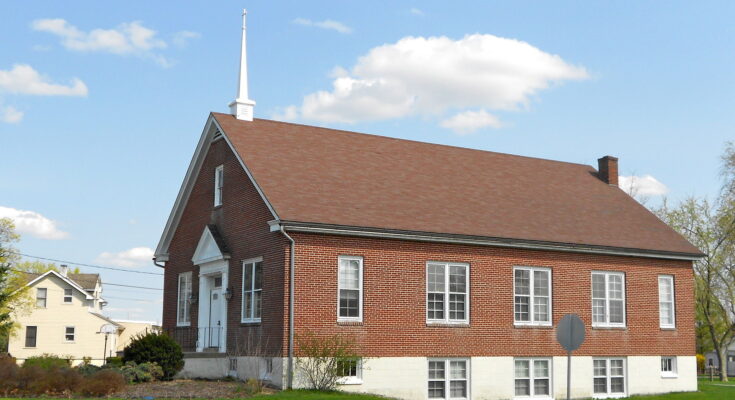
The Jennersville Church of the Brethren, still active along West Baltimore Pike, reflects a tradition grounded in simplicity, service, and quiet conviction. Its presence—steady rather than imposing—mirrors the broader character of the area, where institutions tend to integrate into daily life rather than dominate it.
But Jennersville never developed around a single center.
Instead, it grew outward—incrementally, functionally—its identity shaped by movement: people commuting, students learning, families settling. Nowhere is that more visible than at Pennock’s Bridge, where education has become one of the community’s defining anchors.
At 280 Pennocks Bridge Road, a shared campus brings together the Chester County Technical College High School and Delaware County Community College, forming a 123,000-square-foot hub of layered learning. High school students move through labs and workshops aligned with real-world trades—health sciences, engineering, skilled labor—while, just steps away, college students attend lectures, complete certifications, and begin professional pathways. The building hums with a different kind of industry: quieter, but no less purposeful.
“It’s not just school,” the resident says. “It’s preparation—for whatever comes next.”
That forward-looking energy extends into the broader economy.
The Shoppes at Jenners Village anchor the commercial corridor, serving a population that has steadily grown across southern Chester County. Nearby, major employers like Dansko and Star Roses reflect the region’s blend of commerce and cultivation, reinforcing Penn Township’s identity as the “Nursery Capital of Pennsylvania.”
And still, the land remains present.
Fields stretch beyond the retail centers. Nurseries line the roads. Waterways—Big Elk Creek and tributaries of White Clay Creek—move quietly beneath it all, tying Jennersville into the larger Chesapeake Bay watershed. The landscape has adapted, but it has not disappeared.
“It’s still rooted,” the resident says. “That part hasn’t changed.”
The people tied to this place reflect that same balance between movement and origin.
Eva Griffith Thompson, born near Jennersville in 1842, carried the influence of this rural community into a wider world, becoming a pioneering newspaper editor and one of the first women in Pennsylvania to hold a leadership role in public education. Her work in journalism and civic life unfolded far from Chester County, but her beginnings here remained a defining part of her story.
More than a century later, Shaun Taylor-Corbett—born in Jennersville in 1978—would follow a different path onto national stages, performing on Broadway and across the country. His career in theater and music, rooted in performance and storytelling, echoes the same creative energy that once filled Sunset Park’s open-air stage.
That stage is gone now.
Sunset Park, once one of the most prominent country and bluegrass venues outside Nashville, closed in 1995. The crowds dispersed. The music faded. In its place, a residential landscape took shape, quieter, more contained. Yet the legacy endures—marked by a state historical marker and carried in the memory of those who were there.
“You could feel it in your chest,” the resident says. “The sound, the crowd—it stayed with you.”
As evening settles over Jennersville, the activity along Baltimore Pike begins to taper. Lights flicker on, then off. The steady rhythm of the day gives way to something softer.
Somewhere beyond the road, beyond the storefronts and the classrooms, the land holds its shape. The echoes of music, of learning, of quiet gathering remain—not as something frozen in time, but as something carried forward.
“It’s different now,” the resident says, pausing before heading back toward the road. “But it’s still here. Just in a different way.”
The last light fades across the fields.
And in that shift—from noise to quiet, from past to present—Jennersville continues, holding both without needing to choose between them.
Support the local news that supports Chester County. MyChesCo delivers reliable, fact-based reporting and essential community resources—free for everyone. If you value that, click here to become a patron today.