
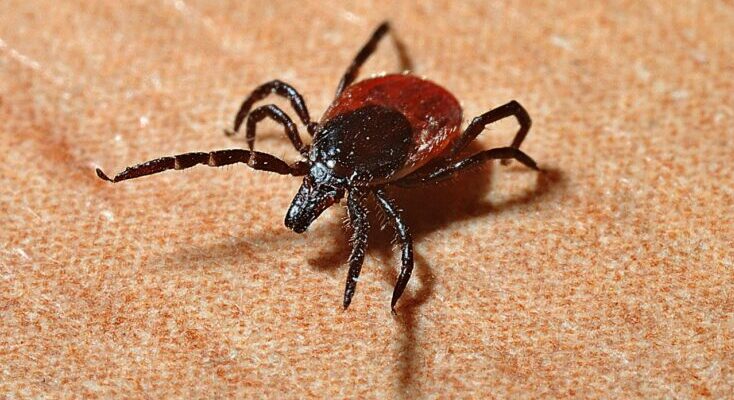
WASHINGTON, D.C. — Emergency room visits for tick bites are rising sharply across most of the United States, reaching the highest levels for this time of year since 2017 in nearly every region, according to new federal data.
What This Means for You
- Tick bites are increasing, raising the risk of diseases like Lyme disease
- Early removal of ticks can reduce the chance of infection
- Preventive steps outdoors can significantly lower exposure
The Centers for Disease Control and Prevention said the increase is being tracked through its Tick Bite Tracker, which monitors trends in emergency room visits tied to tick exposure. All regions except the South Central United States are seeing elevated activity.
Health officials are urging the public to take precautions ahead of peak tick season, which typically runs from April through September, when ticks are most active in grassy, wooded, and brushy areas.
Why Tick Bites Matter
Ticks can carry bacteria and viruses that cause illnesses in humans, including Lyme disease, Rocky Mountain spotted fever, and alpha-gal syndrome — a condition that can trigger an allergic reaction to red meat.
Lyme disease is the most common tickborne illness in the United States, with an estimated 476,000 people treated each year. Overall, about 31 million Americans are bitten by ticks annually.
Symptoms of tickborne illness can include fever, rash, and fatigue. In some cases, infections can become severe if not treated promptly.
How Exposure Happens
Ticks live in environments such as tall grass, wooded areas, and leaf litter, and they can also be carried by animals. People may encounter ticks while walking, gardening, camping, or even spending time in their own yards.
Exposure occurs when ticks attach to the skin and feed. Health officials say removing an attached tick within 24 hours can significantly reduce the risk of contracting Lyme disease.
Prevention Guidance
The CDC recommends several preventive steps to reduce the risk of tick bites.
These include using insect repellents registered with the Environmental Protection Agency, wearing clothing treated with permethrin — a chemical that repels and kills ticks — and avoiding areas with high grass and dense vegetation.
Officials also advise performing tick checks after spending time outdoors and washing hands and clothing after potential exposure.
“Tick season is here and these tiny biters can make you seriously sick,” said Alison Hinckley, an epidemiologist with the CDC. “These simple steps can go a long way in protecting you and your family from diseases spread by ticks.”
Higher-Risk Groups
Certain groups face a greater risk of severe illness, including young children, older adults, and people with weakened immune systems.
Health officials say anyone who develops a rash or fever in the days or weeks following a tick bite should seek medical care.
Where Ticks Are Found
Different species of ticks are found across the United States, with some regions seeing higher concentrations of disease-carrying ticks.
For example, blacklegged ticks — commonly known as deer ticks — are widespread in the eastern U.S. and are a primary carrier of Lyme disease. Lone star ticks, found across much of the East and South, have been linked to multiple illnesses, including alpha-gal syndrome.
Officials caution that while ticks may be present in an area, disease transmission depends on several factors, including whether the ticks carry infectious pathogens.
Ongoing Monitoring
The CDC continues to monitor tick activity and urges the public to stay informed using its Tick Bite Tracker, available at: https://www.cdc.gov/ticks/data-research/facts-stats/tick-bite-data-tracker.html
Support the local news that supports Chester County. MyChesCo delivers reliable, fact-based reporting and essential community resources—free for everyone. If you value that, click here to become a patron today.