
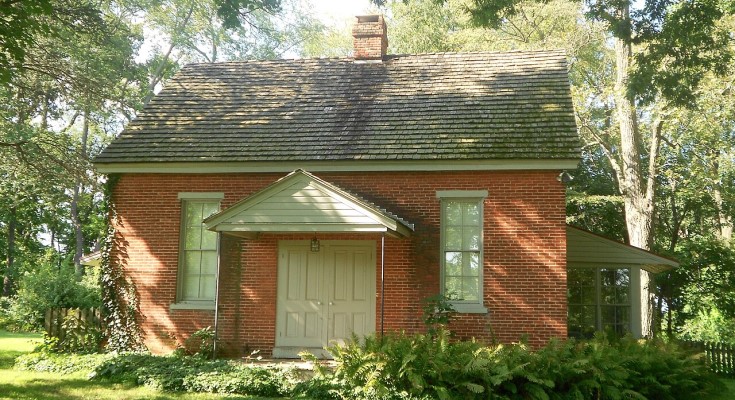
The first light of morning spreads slowly across the Doe Run Valley, turning the dew on pasture grass into thousands of tiny points of silver. A red barn emerges from the mist. Beyond it, split-rail fences trace the contours of rolling hills that have changed little in generations. The air carries the faint scent of freshly cut hay, and from somewhere beyond a grove of sycamores comes the distant rumble of farm equipment beginning another day.
In Londonderry Township, the landscape still speaks in the language of open fields, stone farmhouses, and quiet country roads.
Drive through the township today and it is easy to understand why residents have fought so hard to preserve it. In a county where growth continues to reshape the countryside, Londonderry has charted a different course. More than half of its land has been permanently protected, creating one of Chester County’s most intact agricultural landscapes. At a moment when many rural communities are struggling to balance development with preservation, Londonderry offers a living example of what can happen when a community decides that its fields, farms, and historic character are worth saving.
The story begins more than three centuries ago.
In 1682, William Penn granted 50,000 acres in what is now southern Chester County to his relative Sir John Fagg, creating the settlement known as Fagg’s Manor. The area quickly attracted Scotch-Irish immigrants seeking opportunity on Pennsylvania’s frontier. By 1734, residents voted to separate from Nottingham Township and establish their own municipality, naming it after Londonderry, Ireland—a reflection of the heritage many settlers carried with them across the Atlantic.
The imprint of those early settlers remains visible across the countryside.
At the heart of the historic Faggs Manor community stands Manor Presbyterian Church, known for nearly three centuries as Faggs Manor Presbyterian Church. Founded in 1730, the congregation became one of the region’s earliest centers of Presbyterian worship. Its stone sanctuary rises from a landscape of fields and mature trees, while a centuries-old cemetery preserves the names of families whose descendants helped shape southern Chester County.
Not far away, another congregation tells a different chapter of the township’s story.
Perched above the Doe Run Valley, St. Malachi Roman Catholic Church stands as one of Chester County’s oldest Catholic institutions. Its simple stucco-covered stone exterior reflects the modest architecture of a rural mission church, while its hilltop setting offers sweeping views across the surrounding countryside. Founded during the colonial era and continuously serving worshippers since the 18th century, St. Malachi remains a powerful reminder of the diverse religious traditions that took root in early Pennsylvania.
History reveals itself elsewhere as well.
The John Ferron House, built around 1838 by the carpenter who constructed St. Malachi Church, still stands opposite the historic mission. Nearby, the Moses Ross House rises from the landscape with its distinctive Greek Revival design and imposing two-story portico, an architectural flourish rarely seen in such a deeply rural setting. Together, these properties offer tangible connections to generations of farmers, craftsmen, and families who built lives here.
Yet the township’s greatest historic resource may be the landscape itself.
Londonderry occupies just over 11 square miles, but within that compact footprint lies a remarkably cohesive agricultural environment. Rolling pastures, hedgerows, stream corridors, and working farms continue to define the scenery. The preservation of more than 3,700 acres of open land has ensured that the township remains recognizable to residents whose families have lived here for generations.
That commitment did not happen by accident.
In 2003, township voters approved an open-space referendum that accelerated local preservation efforts. Working alongside county agencies, state programs, and conservation organizations, community leaders helped secure agricultural and conservation easements across thousands of acres. The result is a landscape where farms remain farms, where historic viewsheds endure, and where development has largely been directed away from the township’s most significant rural resources.
The benefits extend beyond aesthetics.
Preserved farmland supports local agriculture, protects wildlife habitat, and helps maintain the rural character that continues to attract families seeking a different pace of life. Today, Londonderry combines that agricultural heritage with modern prosperity. Median household income exceeds $120,000, poverty remains low, and homeownership rates approach 92 percent.
Yet statistics alone fail to explain the attachment many residents feel toward the township.
What they value is often something less measurable.
It is the sight of a stone farmhouse glowing in late-afternoon sunlight.
The quiet of a country road bordered by fields instead of subdivisions.
The familiar silhouette of church steeples rising above the trees.
The knowledge that landscapes shaped by centuries of farming remain active and productive rather than preserved only in photographs.
As evening settles across Londonderry Township, long shadows stretch across the pastures of Doe Run Valley. The last rays of sunlight catch the weathered stone walls of Manor Presbyterian Church. In the distance, a farmhouse porch light flickers on. The sounds of the day begin to fade, replaced by the steady chorus of insects rising from the fields.
The scene feels timeless, though it is anything but accidental.
It exists because generations chose to protect it.
And as another sunset settles over the preserved farms and rolling hills of Londonderry Township, the landscape offers a quiet reminder that some of the most valuable things a community can leave behind are not new at all.
Support the local news that supports Chester County. MyChesCo delivers reliable, fact-based reporting and essential community resources—free for everyone. If you value that, click here to become a patron today.