
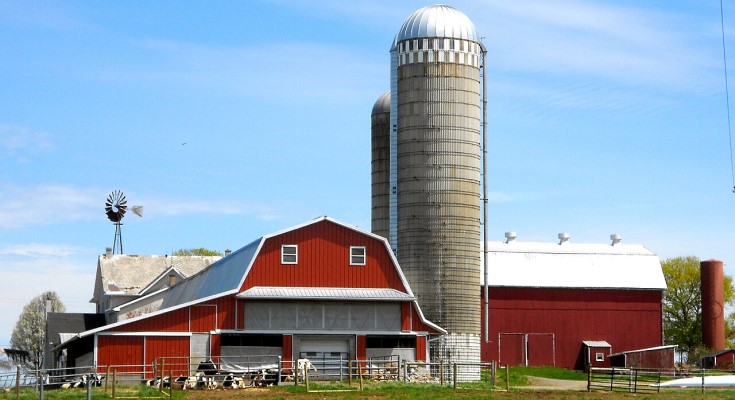
Morning sunlight spills across a patchwork of fields at the edge of Welsh Mountain, illuminating rows of corn that stretch toward the horizon. A tractor moves slowly across the valley floor. Along Horseshoe Pike, weathered barns stand watch over the landscape, their silhouettes unchanged against the rolling hills. In the distance, a church steeple rises above a cluster of homes, marking a community that has grown carefully rather than quickly.
In Honey Brook Township, the land still tells the story.
The terrain unfolds in broad agricultural vistas, winding roads, and fertile valleys where generations of families have worked the same fields. Streams gather at the headwaters of the Brandywine. Historic churches continue to serve congregations whose roots stretch back nearly two centuries. Even as Chester County evolves around it, Honey Brook remains deeply connected to the rural traditions that shaped its identity.
That connection feels increasingly important today. Across southeastern Pennsylvania, development continues to transform farmland into subdivisions, warehouses, and commercial centers. Yet Honey Brook Township remains one of Chester County’s most agriculturally significant communities, with nearly two-thirds of its land still devoted to farming. Its future, in many ways, remains tied to the same landscape that first attracted settlers more than three hundred years ago.
Those settlers arrived as part of William Penn’s ambitious vision.
The area that would become Honey Brook Township emerged from the western reaches of the Welsh Tract, a 40,000-acre settlement established in 1684 for Welsh Quakers seeking both religious freedom and opportunity. Between 1717 and 1720, surveyors laid out large farm tracts near the headwaters of the Brandywine. By the middle of the eighteenth century, East and West Nantmeal townships had formed, and in 1789, Honey Brook Township officially emerged as its own municipality.
Its name carries the memory of that Welsh heritage.
“Nantmel,” the Welsh name from which Honey Brook is derived, translates loosely to “sweet stream”—an appropriate description for a community shaped by waterways, fertile soils, and rolling valleys. Nestled between Welsh Mountain and Barren Hill, the township developed around agriculture, transportation corridors, and the small villages that supported rural life.
Few roads have influenced local history more than Horseshoe Pike.
Today, known as U.S. Route 322, the corridor remains the township’s primary thoroughfare. Long before modern traffic moved through western Chester County, the Horseshoe Turnpike connected rural communities with larger markets to the east and west. Taverns, churches, mills, and homes emerged along its route, creating a transportation landscape that still defines much of the township’s development pattern.
Driving the corridor today offers a glimpse into that continuity.
The road winds past active farms, historic buildings, and open fields that reveal the agricultural character of the region. Unlike many suburban highways, stretches of Horseshoe Pike still provide long views across working farmland and wooded ridges, preserving a visual connection to the township’s past.
Agriculture remains the dominant force shaping the community.
Nearly two-thirds of Honey Brook Township’s land remains in active agricultural use. Fields of corn, soybeans, hay, and pastureland define much of the landscape. Farm markets, agricultural services, and related businesses continue to support the local economy, while generations of farming families maintain traditions that have endured for centuries.
The influence of those traditions extends beyond economics.
Agriculture shapes the township’s rhythm, its scenery, and its sense of place. Seasonal changes arrive not through retail displays or event calendars but through planting, harvest, and the changing colors of the fields. Residents often measure time by the cycles of the land itself.
Faith communities have also played a central role in the township’s development.
Honey Brook United Methodist Church, established in 1823, and Honey Brook Presbyterian Church, founded in 1835, stand as reminders of the institutions that helped anchor rural life during the nineteenth century. Their sanctuaries, cemeteries, and community spaces served not only religious purposes but also acted as gathering places where neighbors shared news, celebrated milestones, and navigated the challenges of everyday life.
At the center of the region sits Honey Brook Borough.
Originally known as Waynesburg, the borough developed into the commercial heart of the surrounding township. The arrival of the Philadelphia-Downingtown-Lancaster Railroad helped shape its growth, while local businesses, churches, and civic institutions created a walkable village core that continues to serve residents today. Though separate municipalities, the township and borough remain closely connected through shared history, schools, and community identity.
The landscape beyond the borough remains remarkably open.
Rolling farmland stretches toward the horizon. Small woodlots punctuate the fields. Streams trace their way toward the Brandywine watershed. The township’s average elevation of nearly 740 feet lends parts of the countryside a distinctive feel, with broad views across valleys and ridgelines that reveal the scale of western Chester County’s agricultural landscape.
Those views help explain why Honey Brook continues to attract new residents even as it preserves its rural character.
The township has experienced steady population growth while retaining much of the landscape that defines it. Families are drawn by open space, agricultural heritage, and a quieter pace of life. Yet unlike many growing communities, Honey Brook’s identity remains grounded in the land itself rather than in rapid development.
As evening settles across the valley, long shadows stretch from the barns and hedgerows along Horseshoe Pike. The last light catches the steeples of churches that have watched over the community for generations. Across the fields, the headwaters of the Brandywine begin another quiet journey eastward.
In Honey Brook Township, history is not preserved behind glass. It lives in the farms, roads, churches, and streams that continue to shape everyday life—proof that some places remain strongest when they remember exactly where they came from.
Support the local news that supports Chester County. MyChesCo delivers reliable, fact-based reporting and essential community resources—free for everyone. If you value that, click here to become a patron today.