
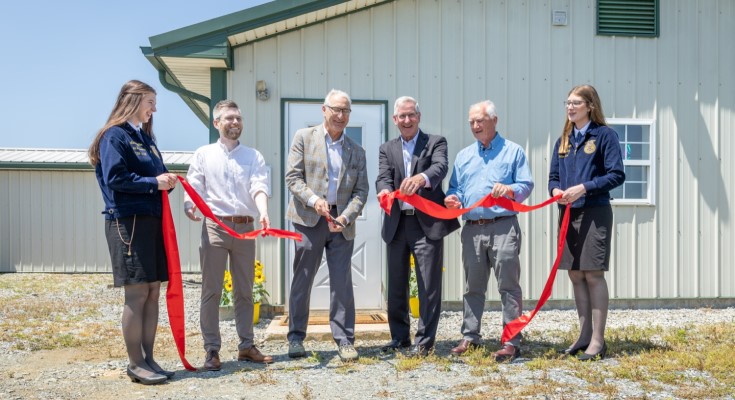
KENNETT SQUARE, PA — Pennsylvania Agriculture Secretary Russell Redding toured a newly opened artificial intelligence laboratory at the University of Pennsylvania’s New Bolton Center on Wednesday, as the Shapiro administration continues expanding state-backed agricultural technology investments aimed at improving livestock health and farm efficiency.
The new DAT-AI-LAB at the University of Pennsylvania School of Veterinary Medicine was launched with $31,000 from Pennsylvania’s Agricultural Innovation Grant Program and an additional $90,000 grant from the Pennsylvania Center for Poultry and Livestock Excellence.
The laboratory uses artificial intelligence to monitor animal behavior and accelerate analysis of livestock health data, helping veterinarians and farmers identify potential health problems earlier and target interventions more precisely.
“The technology in this new, state-of-the-art lab at the New Bolton Center is already serving as a powerful tool to monitor animal health and speed up intervention when speed counts most to protect livestock and a farmer’s operation,” Redding stated.
The project is a collaboration between Penn Vet researchers and Pennsylvania-based AgriGates and is designed to improve livestock monitoring while reducing losses and operational disruptions tied to animal illness.
According to the Department of Agriculture, the facility will serve as a centralized hub for housing agricultural data infrastructure and coordinating research and analytics between veterinarians, researchers and technology specialists.
The lab also expands capabilities at New Bolton Center, one of four facilities in the Pennsylvania Animal Diagnostic Laboratory System, which recently received a separate $6 million state investment.
AgriGates Chief Executive Officer Daniel Foy described the initiative as part of a broader effort to position Pennsylvania as a center for livestock-focused artificial intelligence development.
“By bringing together animal science, artificial intelligence, engineering and real-world farm systems, we are building tools that help farmers and veterinarians detect health and welfare challenges earlier,” Foy stated.
Penn Vet Dean Andrew Hoffman linked the technology to broader opportunities for AI integration across livestock operations, including health management, workforce planning and precision agriculture systems.
The Agricultural Innovation Grant Program has drawn substantially more demand than available funding since its launch.
The first round of the program received more than $68 million in requests for $10 million in available grants, while a second funding round backed by the 2025-26 state budget generated more than 317 applications seeking approximately $73 million.
Governor Josh Shapiro’s proposed 2026-27 budget includes a $9 million increase for the program, including additional funding for agricultural biodigester projects.
Pennsylvania agriculture supports nearly 600,000 jobs and contributes approximately $132.5 billion annually to the state economy, according to the administration.
Support the local news that supports Chester County. MyChesCo delivers reliable, fact-based reporting and essential community resources—free for everyone. If you value that, click here to become a patron today.