
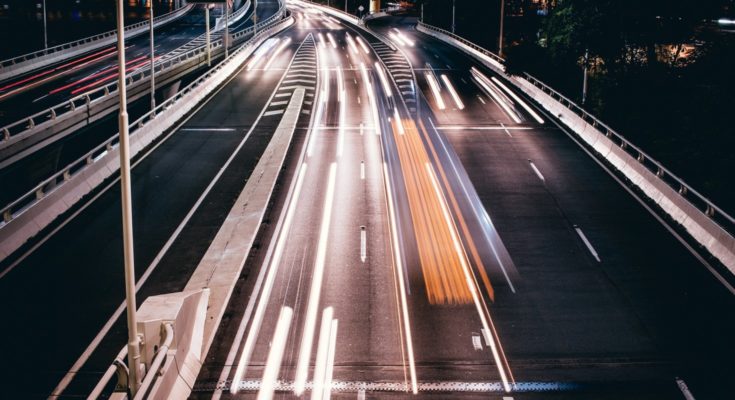
Brake lights stretch endlessly along Route 202, glowing red against the gray-blue haze of an early winter morning. Coffee cools untouched in cup holders as drivers inch forward, eyes fixed on the slow rhythm of merging lanes and sudden stops. A SEPTA train rattles past in the distance, briefly outpacing the traffic before disappearing toward Center City. Inside the rows of cars heading east from West Chester, the workday has already begun long before anyone reaches an office.
By 7 a.m., the exhaustion is visible even in stillness.
Some drivers grip the wheel with quiet focus. Others stare ahead with the practiced resignation of people who know exactly how long the next few miles will take. The commute has become routine in the way tides or weather become routine—predictable enough to plan around, but impossible to control.
For years, suburban life around Philadelphia carried a familiar promise: larger homes, tree-lined neighborhoods, stronger schools, and enough distance from the city to breathe a little easier. But for a growing number of Chester County residents, the daily drive into Philadelphia is reshaping that bargain. According to a recent survey by A Mission for Michael, the West Chester-to-Philadelphia commute ranks as Pennsylvania’s worst for burnout and the 12th most draining commute in the nation.
The survey, which gathered responses from 3,002 drivers nationwide, asked commuters to identify the routes most associated with stress, exhaustion, congestion, roadwork delays, and the steady erosion of personal time. The findings painted a portrait of what researchers described as “burnout belts”—commuter corridors where the workday quietly expands beyond office walls and into the hours spent getting there and back.
“The road into Philadelphia demands hours that never get returned,” the report noted of the West Chester commute. “Mornings begin with time already spoken for, and evenings arrive with less margin than expected.”
For many Chester County residents, that description feels uncomfortably precise.
“You leave home tired before the day even starts,” says one West Chester-area professional who has spent more than a decade commuting into Philadelphia. “And then you get home and realize the best part of the evening is already gone.”
The fatigue rarely arrives dramatically. It accumulates slowly—in missed dinners, shortened workouts, postponed errands, and the quiet calculation of whether an extra stop is worth another 20 minutes in traffic. What appears manageable on paper often feels very different after months or years lived in repetition.
Along the Route 3, Route 30, and Route 202 corridors, commuters navigate a landscape shaped by constant movement. Tractor-trailers drift between lanes. Construction barrels narrow already congested roads. Rain can add another half hour without warning. Even the return home carries uncertainty.
“There’s a mental load that people underestimate,” says Anand Meta, a licensed marriage and family therapist and executive director of AMFM. “Burnout is often framed as something that happens at work, but for many people, it starts and ends with the commute. When you’re losing hours of your day before and after work even begins, it leaves very little room to recover. Over time, that constant drain can have a real impact on mental wellbeing — even if it doesn’t feel obvious at first.”
That strain exists in tension with the very qualities that drew many residents to Chester County in the first place. West Chester’s walkable borough, historic neighborhoods, and surrounding countryside continue to attract professionals seeking distance from Philadelphia without fully disconnecting from it. The county remains one of the state’s most desirable places to live.
But geography has consequences.
The commute into Center City or University City can routinely exceed 90 minutes each way depending on traffic, weather, rail delays, or construction. What was once accepted as a reasonable tradeoff for suburban life increasingly feels like an extension of the workday itself.
“You start measuring your life differently,” another commuter says while waiting at a regional rail station outside the city. “Not in days or weeks. In traffic patterns. In whether the Schuylkill is backed up yet.”
That reality has become more pronounced in the years following the pandemic, as hybrid schedules altered—but did not eliminate—the daily migration into Philadelphia. For some workers, the partial return to office life intensified frustration rather than easing it. Two or three days in the city each week can still require hours of preparation, coordination, and recovery.
The burnout is not unique to southeastern Pennsylvania. The survey identified commuter corridors across the country where long drives have become defining features of daily life, ranking routes such as Palmdale to Los Angeles, White Plains to New York City, and Tacoma to Seattle among the nation’s most draining. Two other Pennsylvania commutes also appeared on the list: Cranberry Township to Pittsburgh at No. 28 and Carlisle to Harrisburg at No. 44.
Still, the West Chester ranking carries particular resonance in a region where commuting has long shaped identity itself. The Main Line, the western suburbs, and Chester County all evolved alongside railroads and highways built to move workers into Philadelphia. The modern suburban ideal was constructed around mobility.
Now, that mobility is beginning to feel more complicated.
By late afternoon, the pattern reverses. Traffic thickens westbound as commuters retrace the same roads back toward Chester County. Headlights flicker on along the Schuylkill Expressway. SEPTA platforms fill again. The distance home feels longer than it did that morning.
And somewhere beyond the final exit ramps and winding suburban roads, porch lights begin to glow in neighborhoods that were supposed to offer relief from the pressures of work.
For many commuters, they still do.
But increasingly, the road comes home with them.
Support the local news that supports Chester County. MyChesCo delivers reliable, fact-based reporting and essential community resources—free for everyone. If you value that, click here to become a patron today.