
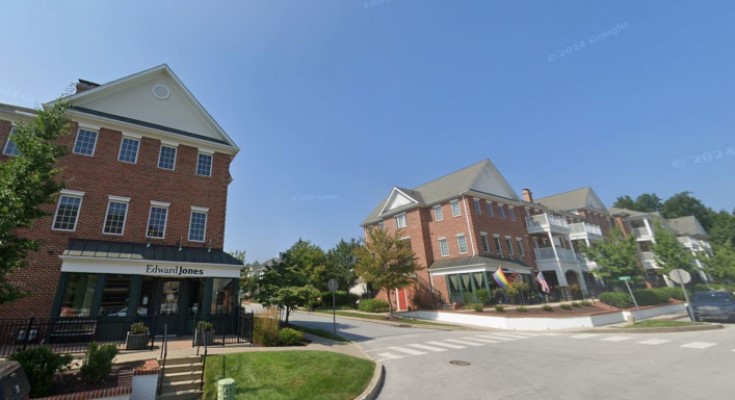
On a warm evening, the sidewalks in Eagleview fill slowly, almost casually. A couple drifts past with takeout in hand. Children loop around a patch of green, their laughter carrying between brick façades designed to look older than they are. Somewhere, music hums from a patio—just loud enough to suggest life, not overwhelm it. The streetlights flicker on one by one, casting a soft, amber glow that feels less like infrastructure and more like intention.
At first glance, it could be mistaken for a town that grew this way over generations. But Eagleview is something else entirely—a place built not from time, but from an idea.
“It’s funny,” one resident says, pausing near the Town Center as neighbors pass in both directions. “You move here because it feels established. Then you realize—it was designed to feel that way.”
Eagleview matters now because it sits at the center of a national conversation about how Americans want to live—and how communities should be built. Created as “an old-fashioned town where you can work, live, shop, see your elders, and care for the young all in the same place,” it has become a working model of new-urbanist design in a region otherwise defined by suburban sprawl. As development pressures continue across Chester County, Eagleview offers a different blueprint—denser, more walkable, and deliberately interconnected.
The geography reinforces that contrast. Tucked along the northwestern edge of Uwchlan Township, just off Route 100 and minutes from the Pennsylvania Turnpike, Eagleview occupies only about 1.36 square miles. Yet within that compact footprint, it manages to contain something rare: a sense of cohesion.
The Town Center acts as both anchor and stage. Restaurants spill into sidewalks. Offices sit within walking distance of homes. Fitness studios, salons, and cafés exist not as destinations, but as extensions of daily life. On weekends, the rhythm shifts—farmers markets, concerts, and seasonal festivals transform the same streets into gathering spaces.
What distinguishes Eagleview is not just its layout, but its pacing. The design encourages lingering. Sidewalks are wide enough to invite conversation. Green spaces interrupt the built environment just often enough to soften it. The effect is subtle but cumulative—a place that nudges people out of their cars and into shared space.
“You see people here,” the resident continues. “Not just passing by—you actually see them. That changes things.”
Demographically, the community reflects a certain stability. With a population just over 2,100 residents as of the most recent census , Eagleview trends older, with a median age well above national averages. Households are smaller, incomes higher, and poverty rates notably low. It is, by most measures, an affluent enclave—but one that resists the isolation often associated with that label.
Instead, the design pulls people outward. A morning might begin with a short walk to coffee, pass through a workday in a nearby office, and end with dinner just a few blocks away. The distances are measured less in miles than in minutes—and often on foot.
Urban planners have taken notice. Eagleview has been featured in planning publications and academic studies examining everything from green-space ratios to safety in mixed-use environments. Satellite imagery has even been used to compare its land efficiency, showing that its medium-density design produces more living space per acre than traditional low-density development.
But statistics only tell part of the story.
Late in the day, when the light shifts and the sidewalks begin to quiet, Eagleview reveals something closer to its underlying philosophy. The noise softens. Conversations linger a little longer. The space between buildings—intentional, measured—begins to feel like part of the architecture itself.
It is not nostalgia, exactly. There is no true past being preserved here. Instead, there is a careful reconstruction of something many places have lost: proximity, familiarity, the casual friction of everyday life shared in public.
“It’s not perfect,” the resident says, watching as a small group gathers near a restaurant entrance, greeting each other without hesitation. “But it’s close to what people think they remember.”
As the evening settles in, the lights hold steady, and the sidewalks empty at their own pace. Nothing feels rushed. Nothing feels accidental. And for a moment, standing at the center of it, the illusion completes itself—not of a town trying to become something new, but of one that has always been exactly this way.
Support the local news that supports Chester County. MyChesCo delivers reliable, fact-based reporting and essential community resources—free for everyone. If you value that, click here to become a patron today.