
The Schuylkill moves slowly here, its surface catching the last of the afternoon light in uneven flashes—silver, then gray, then something closer to green. Along the bank, the ground softens underfoot, a mix of grass and worn paths that suggest people come here often, even if there’s no sign telling them to. Across the water, rooftops rise in familiar rows. A car passes somewhere behind, but the sound arrives muted, as if filtered through the trees.
South Pottstown sits in that in-between space—part river, part road, never entirely one or the other.
It doesn’t announce a boundary when you enter. Instead, it reveals itself through function: a turn onto Route 724, a merge onto 422, a line of storefronts that feel both new and settled. It has always been tied to Pottstown across the river, less a separate place than a continuation shaped by geography.
That relationship is what defines South Pottstown now. As the greater Pottstown area continues to recalibrate—balancing redevelopment, residential growth, and shifting economic patterns—this side of the river reflects a quieter evolution. It is not reinventing itself so much as absorbing change, adapting in place.
“It’s always been connected,” a longtime resident says, glancing toward the bridge that links the two sides. “You cross over, but you don’t feel like you’ve left anything. It’s all part of the same story.”
That story begins with movement.
Long before the highways, the river carried it. The Schuylkill was a working corridor, its navigation system moving goods between Reading and Philadelphia. Along its banks, small settlements formed to serve that traffic—places like Pottstown Landing, where stone houses and canal structures lined the water’s edge, built for function but enduring long after their original purpose faded.
Today, the district remains, its buildings arranged in a pattern that still follows the logic of the canal. The streets run parallel to the river, the architecture close-set and deliberate. It is not preserved as spectacle. It simply continues, integrated into the daily rhythm of the community.
A few minutes away, that rhythm shifts.
At The Shoppes at Coventry, the sound changes—car doors, conversation, the low churn of activity that defines a modern commercial center. The layout is open, walkable, designed for ease. It draws people from both sides of the river, from townships and boroughs that meet here not by design, but by habit.
“It’s convenient,” another resident says, adjusting a bag in hand. “You don’t think about it. You just come.”
That ease of movement defines South Pottstown as much as its geography does. Routes 422, 724, and 100 intersect here, carrying commuters toward King of Prussia, Reading, and beyond. Most residents drive, their routines shaped by those corridors, their days measured in travel times that remain manageable, predictable.
And yet, the presence of the river complicates that efficiency.
It introduces a pause.
Floodplain markers stand as quiet reminders of its influence, and longtime residents speak of seasons when the water rises higher than expected, reshaping the edges of the land. Even at rest, the river holds a kind of authority—something that resists full control.
“It keeps you aware,” the resident says. “You can build around it, but you don’t ignore it.”
That awareness extends into the character of the community itself.
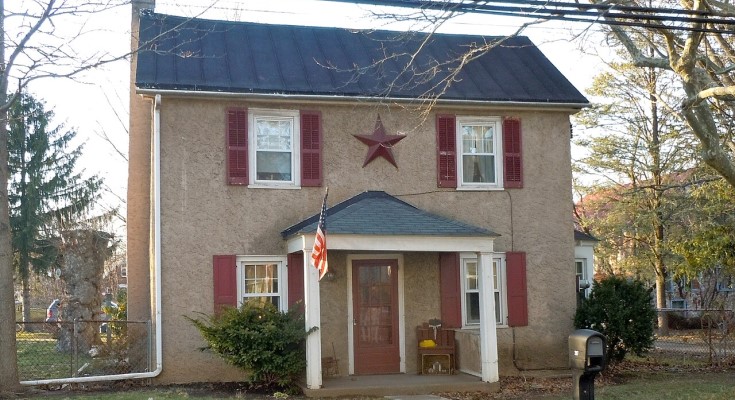
With just over 2,000 residents, South Pottstown remains compact, its neighborhoods defined less by density than by proximity. Homes sit close enough to suggest connection, but not so close as to feel crowded. Median incomes and property values place it in a middle ground—neither affluent enclave nor struggling corridor, but something steadier, more balanced.
There are no singular events that define the calendar here. Life spills outward instead—into Pottstown festivals, along the Schuylkill River Trail, through township programs that blur the lines between one place and the next. South Pottstown participates rather than hosts, contributing to a larger regional identity while maintaining its own quieter presence.
As evening settles in, the river darkens first. The light fades from its surface, leaving only the movement—slow, continuous, almost imperceptible. Traffic picks up briefly, then thins. The sounds of the day fold back into something softer.
Standing at the water’s edge, the boundary between places feels less important than the connections between them.
“You don’t come here for one thing,” the resident says, watching the current move past. “You come because everything meets here.”
The river keeps moving. The road does, too. And between them, South Pottstown holds its place—not fixed, but steady—shaped by both, defined by neither, and always, quietly, in motion.
Support the local news that supports Chester County. MyChesCo delivers reliable, fact-based reporting and essential community resources—free for everyone. If you value that, click here to become a patron today.