
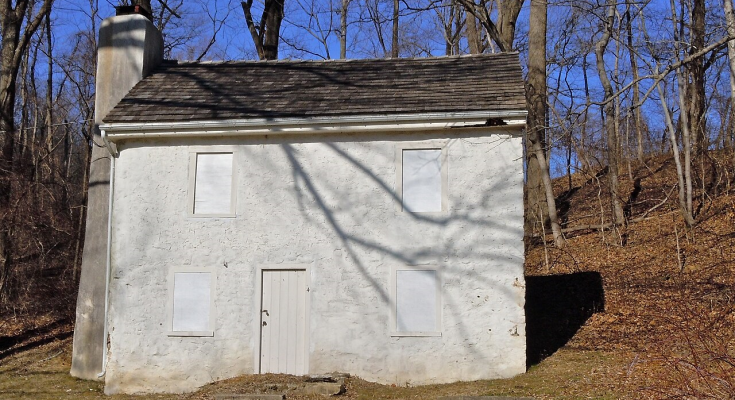
The first light of morning spills across Kings Highway, illuminating weathered stone walls and white farm fences that have stood beside the road for generations. A pickup truck rumbles past a cornfield near Wagontown. In the distance, mist hangs above a patchwork of rolling farmland, while the steeple of an old church rises above the trees.
The road seems ordinary enough.
Yet for more than three centuries, people have followed this route across the Chester County countryside. Native Americans walked its earliest paths. Colonial settlers widened it into a wagon road. Stagecoaches, drovers, merchants, and farmers later traveled its dusty surface, carrying goods and news between Philadelphia and Lancaster.
To understand West Caln Township is to understand the power of a road.
At a time when many communities have lost touch with the landscapes that shaped them, West Caln still bears the imprint of its earliest transportation corridors. The township’s fields, villages, taverns, and historic homes remain arranged around the routes that first brought people here, creating a place where history still feels deeply embedded in the land.
The story begins long before West Caln formally existed.
The larger Caln Township was established in 1714, and by the 1720s the area west of the Brandywine was attracting English and Welsh Quaker families drawn by fertile soils and the promise of William Penn’s colony. As settlement increased, the region was divided into East and West Caln in 1728, with the township’s boundaries formally recognized in 1744.
The settlers found more than productive farmland.
They found opportunity along a transportation corridor.
The route that became Kings Highway originated as an Indigenous trail, later evolving into Old Peter’s Road and eventually one of Pennsylvania’s most important east-west thoroughfares. Long before railroads or highways, it served as the region’s commercial lifeline.
Where roads existed, communities followed.
Taverns appeared first.
The Sign of the Waggon, established around 1736, became one of the township’s earliest gathering places. Built of fieldstone and positioned along the busy travel route, it offered meals, lodging, and companionship to wagoners and farmers making the long journey between Philadelphia and Lancaster.
The building still stands today.
Its thick stone walls have witnessed nearly three centuries of travelers, conversations, and changing times. Local tradition also holds that the inn may have played a role in the Underground Railroad, adding another layer to its already remarkable history.
Further along the old highway sits another enduring landmark.
The site of the Sandy Hill Tavern emerged as an essential stop in the late eighteenth century. Though its later 1805 brick reconstruction would famously struggle to secure a legal pouring license, the location itself served as a vital anchor where early stage passengers rested, farmers exchanged news, and local residents gathered to discuss politics, crops, and the events shaping a young nation.
These taverns were more than businesses.
They were the social centers of rural Pennsylvania.
West Caln’s historical significance extends beyond its roads and inns.
The Hatfield-Hibernia Historic District preserves one of Chester County’s most intact rural landscapes, where stone farmhouses, open fields, and wooded corridors continue to reflect patterns established generations ago. The district’s close ties to the nearby Hibernia iron operations illustrate how agriculture and industry developed side by side across the region.
At its center stands the impressive Hibernia House.
Overlooking what is now Chambers Lake, the stone mansion grew alongside the prosperity of the Hibernia iron plantation. Expanded and refined over decades, it remains one of Chester County’s most important surviving ironmaster’s residences and a reminder that this quiet countryside once played a meaningful role in Pennsylvania’s early industrial economy.
Yet agriculture remained the township’s defining force.
Even today, West Caln retains much of the rural character that first attracted settlers more than three centuries ago. Rolling farmland, wooded tracts, and scattered villages continue to shape the landscape, even as the township has evolved into a rural-suburban community connected to larger employment centers in Coatesville, Downingtown, and beyond.
That balance has become increasingly valuable.
The township’s population has steadily grown, and new residents continue to discover what earlier generations already knew: that West Caln offers something increasingly difficult to find in southeastern Pennsylvania.
Space.
History.
And a sense of continuity.
More than 150 historic buildings remain scattered across the township, quietly preserving stories of Quaker settlers, ironmasters, innkeepers, and farming families. Local government has invested in preserving that heritage while managing the realities of modern growth, seeking to ensure that development does not erase the landscapes that define the community.
As evening settles across West Caln, the last rays of sunlight catch the stone walls of an old farmhouse near Kings Highway. Traffic continues along the road, though at a pace far different from the wagons and stagecoaches that once passed this way.
The road keeps carrying people forward.
It always has.
And in West Caln Township, it continues to do something else as well: reminding everyone who travels it that some communities are still shaped by the paths that first brought people there.
Support the local news that supports Chester County. MyChesCo delivers reliable, fact-based reporting and essential community resources—free for everyone. If you value that, click here to become a patron today.