
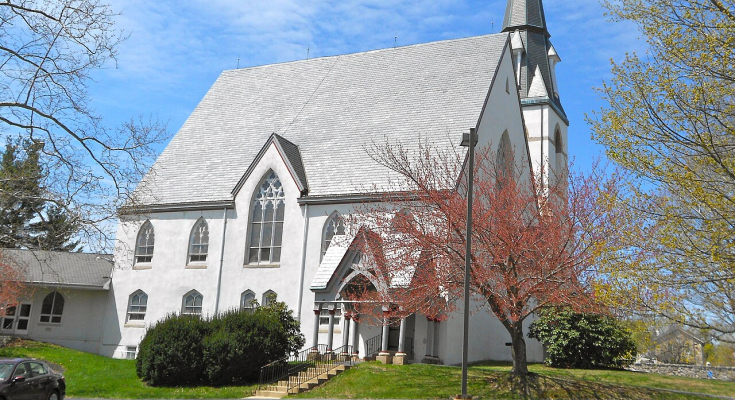
A light breeze moves through the trees at West Brandywine Township Park as folding chairs begin to appear on the grass. Children race toward the playground while neighbors greet one another by name. In the distance, a guitarist tests a microphone for the evening’s summer concert, and the scent of freshly cut grass hangs in the warm air.
The scene feels distinctly small-town.
Yet only a short drive away, traffic streams along busy Chester County corridors and subdivisions continue to push outward from Philadelphia’s suburbs. In West Brandywine Township, however, there remains an unusual sense of space—rolling hills, wooded pockets, and open landscapes that still shape daily life.
That balance has become increasingly valuable.
As Chester County’s population continues to grow, West Brandywine has quietly evolved into one of the region’s most appealing examples of managed change: a community that has welcomed new residents while preserving much of the rural character that first drew people here. Its historic landscapes, aging farmsteads, and gathering places tell a story not simply of growth, but of continuity.
The township itself is relatively young by Chester County standards.
West Brandywine was incorporated in 1844, carved from neighboring communities during an era when local government boundaries were being refined to reflect growing populations and changing patterns of settlement. But the land’s history stretches much further back.
Long before township lines existed, early settlers established farms across the rolling terrain and built communities tied to agriculture and small-scale industry. The landscape’s gentle ridges and tributaries of the Brandywine Creek created fertile ground for farming and encouraged settlement patterns that remained remarkably stable for generations.
That history still lingers in places like the Hatfield-Hibernia Historic District.
The district preserves a landscape where stone homes, historic farmsteads, and old transportation corridors still define the scenery. Here, open fields meet wooded stream valleys much as they did in the eighteenth and nineteenth centuries, when farmers and laborers traveled roads that connected rural communities to the nearby Hibernia iron operations.
Unlike many historic districts that survive as isolated collections of buildings, Hatfield-Hibernia remains a landscape.
The spacing between structures, the relationship between farms and roads, and the persistence of open land all help tell the story. It is a place where history can still be experienced geographically, not merely observed architecturally.
That sense of continuity has become increasingly rare.
West Brandywine’s population has grown steadily over the past several decades, rising from just over 7,300 residents in 2020 to an estimated population exceeding 8,100 today. New neighborhoods have emerged, and more residents now commute to employment centers in Downingtown, Exton, and beyond.
Yet the township has largely avoided losing its identity.
Drive along Lafayette Road or Reeceville Road and the landscape still feels spacious. Mature woodlands break up development. Farm fields continue to define portions of the countryside. Even newer neighborhoods often sit within a setting that remains unmistakably Chester County.
The township’s demographics also tell an interesting story.
West Brandywine is older than both Chester County and Pennsylvania overall, with a median age exceeding 51. Many residents have chosen the community precisely because of its quieter pace and rural atmosphere. Homeownership is exceptionally high, and the township has become a place where people tend to stay.
That stability shows itself most clearly in the community’s public spaces.
West Brandywine Township Park has evolved into the township’s unofficial town square. Summer concerts bring neighbors together on warm evenings. Families gather for seasonal celebrations. Children play while adults catch up on local news and upcoming events.
In an era increasingly defined by digital connections and fragmented communities, the park serves a simple but important purpose: it gives residents a place to be neighbors.
The township’s landscape contributes to that sense of connection as well.
The rolling hills and wooded areas surrounding the Brandywine watershed create an environment that feels distinctly removed from the pace of nearby suburban centers. The terrain encourages outdoor recreation and preserves a sense of visual openness that many communities have lost.
It also serves as a reminder that places are often defined as much by what they choose not to become.
West Brandywine has grown, but not at the expense of every open field. Development has arrived, but not in a way that erased the township’s agricultural roots or historic character. The result is a community that feels neither entirely rural nor fully suburban, but comfortably suspended somewhere between the two.
As evening settles over the township park, the first notes of music drift across the lawn. Children chase one another through the fading sunlight while families unfold blankets and settle into their chairs. Beyond the trees, the rolling countryside darkens toward night.
For a few hours, the worries of growth and change seem very far away.
And perhaps that is West Brandywine Township’s quiet achievement: not that it has resisted change entirely, but that it has managed to create enough room—for history, for open space, and for community—that life here can still pause long enough to hear the music.
Support the local news that supports Chester County. MyChesCo delivers reliable, fact-based reporting and essential community resources—free for everyone. If you value that, click here to become a patron today.