
A late-afternoon breeze ripples across the lawns of Lincoln University, carrying the distant sound of students crossing campus between classes. Sunlight settles on the red-brick facades of academic buildings that have stood watch over generations of scholars. Beyond the campus, fields stretch toward the horizon, broken only by tree lines, farmsteads, and the winding roads that have connected this corner of Chester County for centuries.
A few miles away, the East Branch of the Octoraro Creek slips quietly beneath the Pine Grove Covered Bridge. The weathered red structure casts reflections across the water as visitors pause to photograph one of southeastern Pennsylvania’s most recognizable rural landmarks. The scene feels timeless—a meeting of landscape, history, and place that continues to define Lower Oxford Township.
That blend of heritage and evolution is what makes Lower Oxford distinctive today. While much of Chester County’s growth has been concentrated around major transportation corridors and expanding suburbs, Lower Oxford remains rooted in a landscape shaped by immigration, education, agriculture, and resilience. At a time when communities across the region are searching for ways to preserve identity amid change, this township offers a story that spans from colonial border disputes to one of the most influential educational institutions in American history.
The story begins long before the township’s modern boundaries were drawn.
During the colonial era, this region occupied a contested frontier between Pennsylvania and Maryland. Settlers arrived despite uncertainty over which colony governed the land. Among them were large numbers of Irish and Scotch-Irish immigrants who established farms, churches, and communities throughout southern Chester County. One-third of present-day Lower Oxford Township fell within a Maryland-created settlement known as New Connaught, part of a broader effort to attract Irish settlers to the borderlands.
The eventual surveying of the Mason-Dixon Line settled the dispute, but the influence of those early settlers never disappeared.
Their legacy remains visible in the township’s rural landscape. Farm fields follow patterns established generations ago. Historic roads trace routes once traveled by settlers moving westward into Pennsylvania’s interior. Small crossroads communities still anchor portions of the countryside, connecting the present to a formative period in the region’s history.
Yet Lower Oxford’s most significant contribution to the American story emerged not from its farms but from its classrooms.
Rising above the surrounding countryside, Lincoln University stands as both a local landmark and a national institution. Founded in 1854 as Ashmun Institute, it became the first degree-granting historically Black university in the United States. For more than 170 years, students have arrived on its hilltop campus seeking opportunities that once seemed out of reach.
Its influence extends far beyond Chester County.
Among its alumni are Supreme Court Justice Thurgood Marshall, poet Langston Hughes, and Ghana’s first president, Kwame Nkrumah. The university became a center of Black intellectual life during some of the nation’s most consequential periods, producing leaders who would help shape law, literature, civil rights, and international politics.
Walking across campus today, visitors encounter more than academic buildings. They encounter a living chapter of American history.
Open lawns connect historic structures to newer facilities. Students gather beneath mature trees. Faculty members continue traditions of scholarship and civic engagement that have defined the institution for generations. The campus remains both a place of learning and a symbol of perseverance.
History takes other forms throughout the township as well.
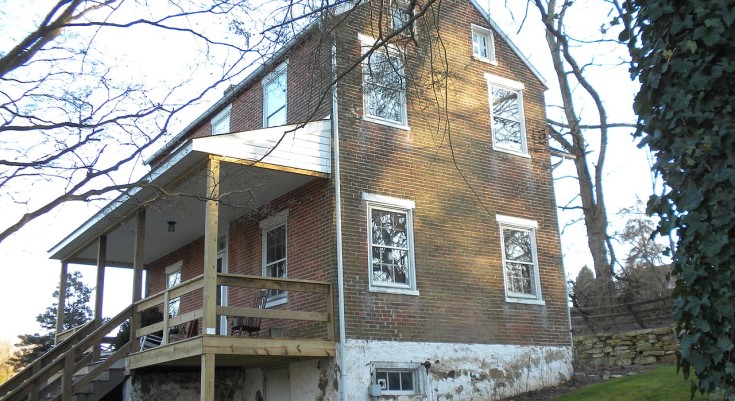
Along the Hopewell and Tweed Creek valleys, the Hopewell Historic District preserves the remnants of a 19th-century mill village that once hummed with industrial activity. Stone worker houses, former mill buildings, and agricultural landscapes remain arranged much as they were during the community’s peak. Together, they tell the story of a self-contained settlement where work, family life, and industry existed side by side.
Nearby, the Pine Grove Covered Bridge offers another connection to the past.
Spanning nearly 200 feet across the East Branch of the Octoraro Creek, the bridge remains the longest covered bridge in Chester and Lancaster counties. Built in 1884, its red-painted wooden sides and Burr-arch truss construction embody a form of engineering that once defined rural transportation throughout Pennsylvania.
Today, it serves a different purpose.
Visitors stop to photograph it. Cyclists pause along nearby roads. Families explore the creek banks below. The bridge has become a destination not simply because of its age, but because it preserves a visual connection to a landscape that still feels unmistakably rural.
That rural identity remains central to Lower Oxford’s character.
The township encompasses more than 18 square miles of farmland, open space, and residential communities. Agriculture continues to shape the scenery even as population growth has steadily increased over the past century. Homeownership remains high, and many residents are drawn by the combination of open landscapes, strong community ties, and proximity to employment centers throughout Chester County and neighboring states.
The result is a community that reflects both continuity and change.
Historic farms operate alongside newer neighborhoods. Students from around the world attend classes at Lincoln University. Families whose roots stretch back generations share the township with newcomers seeking a quieter pace of life.
As evening settles across Lower Oxford Township, long shadows stretch across the fields surrounding Lincoln University’s campus. The last sunlight catches the roof of the Pine Grove Covered Bridge before slipping behind the trees. Somewhere in the distance, church bells ring across the countryside.
The landscape grows quiet.
Yet beneath that quiet lies a story still unfolding—a place where the legacy of immigrants, educators, farmers, and community builders continues to shape the future, just as surely as it shaped the past.
Support the local news that supports Chester County. MyChesCo delivers reliable, fact-based reporting and essential community resources—free for everyone. If you value that, click here to become a patron today.