
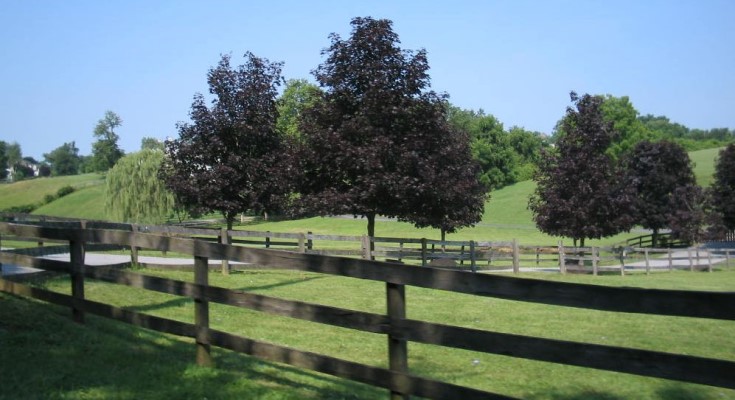
Early morning settles softly along Creek Road in East Bradford Township. Mist drifts above the East Branch Brandywine Creek while sunlight filters through sycamores leaning over the water, their reflections breaking gently across the current below Cope’s Bridge. A cyclist moves quietly past old stone farmhouses and split-rail fences, and somewhere beyond the tree line, the muffled rush of the creek folds into birdsong rising from the valley floor.
The landscape feels unusually intact for a place sitting only minutes from downtown West Chester.
By midmorning, traffic thickens along nearby commuter corridors, but here the roads still curve naturally around hills, streams, and centuries-old properties. Covered bridges remain part of daily life rather than museum pieces. Historic mill sites still anchor crossroads communities. Long stretches of open meadow continue separating neighborhoods that, in many surrounding parts of Chester County, would already have merged into continuous suburbia.
East Bradford Township has become one of the Brandywine Valley’s quiet balancing acts — a prosperous, steadily growing residential community that has managed to preserve large portions of its historic and environmental identity even as development continues pressing outward from West Chester and the Route 202 corridor.
“You can still feel the old valley here,” says a longtime resident walking near Harmony Hill Nature Area. “Not just the buildings — the spacing, the roads, the creek, the way the land opens up.”
That continuity defines much of East Bradford’s character.
The township’s rolling terrain, wooded stream valleys, and preserved open-space corridors create a landscape where history remains physically woven into everyday life. Along the East Branch Brandywine Creek, stone bridges and mill districts emerge naturally from the terrain rather than standing apart from it. In places like the Worth-Jefferis Rural Historic District, the relationship between farmland, waterways, and early transportation routes remains remarkably legible centuries later.
Nowhere is that connection more visible than at Cope’s Bridge.
Built in 1807, the stone arch span still carries traffic across the Brandywine with the quiet confidence of old craftsmanship. Its broad arches and weathered masonry rise from the creek almost organically, framed by steep wooded banks and historic farm landscapes that have changed far less than much of southeastern Pennsylvania.
A few miles away, Gibson’s Covered Bridge introduces another layer of the township’s historical texture. The red Burr-arch truss bridge, built in 1872, still crosses the creek beside Harmony Hill Road, preserving the atmosphere of a rural Brandywine crossing that once defined everyday movement through the valley.
“People come here for photographs all the time,” the resident says with a laugh. “But if you live nearby, you eventually stop realizing how unusual it is to drive across a covered bridge on your way home.”
The township’s industrial past lingers quietly as well.
At Strode’s Mill Historic District, stone mill buildings and outbuildings anchor the intersection of Lenape and Birmingham Roads in a configuration that still reflects the rhythm of an early industrial crossroads. The nearby stream once powered mills serving surrounding farms throughout the Brandywine Valley, and many of those relationships between landscape and labor remain visible in the terrain itself.
Even newer development in East Bradford often feel softened by that older geography.
Large residential neighborhoods sit behind wooded buffers and preserved fields. Stream corridors remain protected. Open-space initiatives and conservation priorities have helped retain long views across farmland and creek valleys that might otherwise have disappeared decades ago.
The result is a township that feels simultaneously affluent and restrained.
Demographically, East Bradford reflects many of the broader changes reshaping Chester County — rising home values, highly educated residents, growing suburban pressure, and continued population growth. Yet much of the township still moves at a slower visual pace than neighboring commercial corridors.
That slower rhythm becomes especially noticeable in places like Shaw’s Bridge Park.
Along the creekside trails, kayakers drift beneath overhanging trees while anglers stand quietly near the water’s edge. Footpaths wind through shaded woodland before opening suddenly into broad meadow views overlooking the Brandywine corridor. Just beyond the trees, the historic landscape continues almost uninterrupted toward neighboring townships.
“It doesn’t feel manufactured,” the resident says while looking across the creek. “That’s the difference. The valley still feels connected to itself.”
In many communities surrounding West Chester, suburban growth gradually erased the older agricultural framework beneath it. East Bradford, however, still carries visible traces of the region’s earlier identity — not simply in preserved structures, but in the spacing of roads, the preservation of stream valleys, and the continuity of open land.
As evening settles over the township, the Brandywine darkens beneath the arches of Cope’s Bridge while the last sunlight catches the red siding of Gibson’s Covered Bridge downstream. The roads grow quieter again. Tree shadows lengthen across old fields. The creek continues moving through the valley much as it has for centuries.
And for a little while longer, the Brandywine landscape still feels like it remembers exactly what it has been.
Support the local news that supports Chester County. MyChesCo delivers reliable, fact-based reporting and essential community resources—free for everyone. If you value that, click here to become a patron today.