
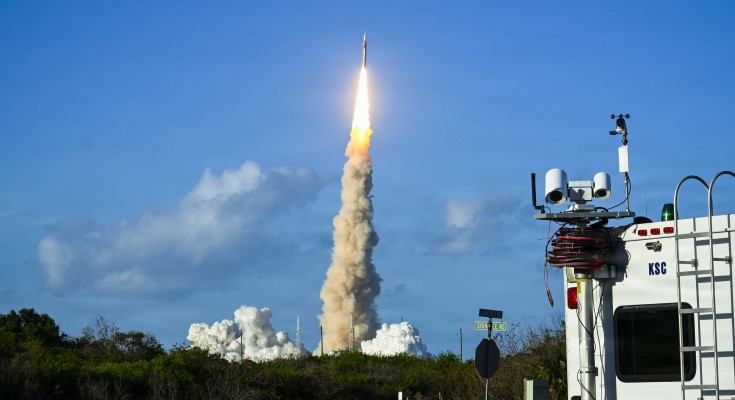
WASHINGTON, D.C. — Behind every NASA crewed launch, a specialized federal team is on standby to respond to potential disasters, providing medical and forensic expertise in case of emergencies during space missions.
What This Means for You
- Federal teams are in place to respond to worst-case scenarios during space launches
- Planning includes coordination across states and even international jurisdictions
- Extensive training ensures rapid response if an incident occurs
The Armed Forces Medical Examiner System, the federal government’s primary system for investigating deaths under federal jurisdiction, supports NASA through a formal agreement to assist with contingency planning and response during human spaceflight missions.
Officials say the role is largely unseen but critical to mission preparedness.
Role During Launches
Under a memorandum of understanding with NASA, AFMES provides personnel trained to respond to emergencies during crewed launches, including NASA’s Artemis II mission.
The team participates in on-site triage operations — the process of prioritizing medical care during emergencies — and advises on contingency planning as launch conditions evolve.
Investigators work alongside NASA medical officers, Kennedy Space Center teams, and regional medical units to prepare for potential incidents.
Training and Preparation
AFMES personnel conduct extensive training with NASA and other partners, including same-day “just-in-time” exercises before launches.
These sessions prepare teams for immediate response scenarios, including hazardous material handling, casualty triage, and recovery operations.
Launch day preparations can begin hours in advance and involve detailed coordination across agencies.
Even after a successful launch, teams conduct follow-up exercises to review procedures and maintain readiness.
Complex Coordination Across Jurisdictions
One of the most challenging aspects of planning involves jurisdiction — determining which authorities would lead a response if an incident occurs.
Because spacecraft trajectories can span multiple states and even countries within minutes, response planning must account for coordination across a wide geographic area.
Officials said this includes working with federal, state, and international partners to clarify roles and responsibilities before a mission begins.
Lessons From Past Disasters
The approach is informed by past incidents, including the 2003 Space Shuttle Columbia disaster, which created a debris field spanning nearly 2,000 square miles across Texas and Louisiana.
That event required coordination across multiple jurisdictions and highlighted the importance of pre-established relationships between agencies.
Officials said those lessons continue to shape current planning efforts.
Specialized Expertise
AFMES investigators are certified professionals with experience in aviation accident investigations and large-scale fatality management.
Their expertise allows them to advise on how to handle complex scenarios that could arise during space missions.
“AFMES is uniquely positioned to support NASA as an acknowledged authority on aerospace pathology and mishap response,” said medicolegal death investigator Kate Grosso.
Prepared but Hoping Not to Respond
Officials emphasized that while the team is prepared to respond, the goal is for their services never to be needed.
Grosso said the work reflects a balance between readiness and hope for mission success.
“I am always so enthused when things go off the way that they do because I never want to be needed,” she said.
Federal officials said the continued coordination and training are intended to ensure that, if an incident does occur, response teams are ready to act quickly and effectively.
Support the local news that supports Chester County. MyChesCo delivers reliable, fact-based reporting and essential community resources—free for everyone. If you value that, click here to become a patron today.