
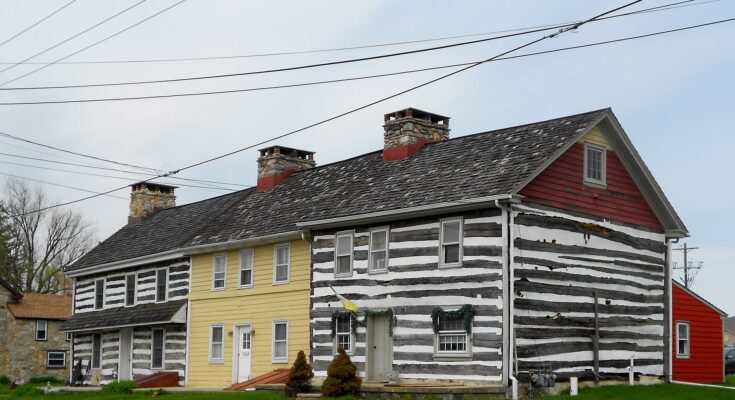
The morning rush moves quickly along the Lincoln Highway. Pickup trucks roll past weathered stone buildings. Commuters stream toward Coatesville and Lancaster. At a traffic light in Sadsburyville, a line of cars stretches past storefronts that have watched travelers pass for generations. To most drivers, it is simply another stop along Route 30.
But the road tells a different story.
Beneath the steady flow of modern traffic lies a landscape shaped by wagon wheels, railroad whistles, and nearly three centuries of shifting borders. Sadsbury Township may cover barely six square miles on the western edge of Chester County, yet its history mirrors the larger story of Pennsylvania itself—a place where transportation, industry, and growth repeatedly redrew both maps and identities.
That story feels especially relevant today.
As development continues to spread westward from Chester County’s population centers, communities like Sadsbury face familiar questions about growth, preservation, and character. The township’s history is one of adaptation. What remains remarkable is how much of that history is still visible, embedded in village streetscapes, former railroad corridors, and the old highway that continues to define daily life.
The township’s origins stretch back to a time when it was far larger than it is today.
In 1717, Sadsbury Township encompassed a vast territory spanning portions of what are now Chester and Lancaster counties. Over the following century and a half, its massive colonial footprint was steadily carved away as the region grew. A border split in 1729 separated the Chester and Lancaster County halves, and Sadsbury’s remaining land was repeatedly divided to form new neighbors. Parkesburg became an independent borough in 1872, Atglen followed three years later, and the township’s final western half formally split away to become West Sadsbury in 1878.
Each division reduced the township’s footprint.
What remains today is the final surviving piece of a once-expansive colonial tract—a community whose boundaries tell the story of western Chester County’s growth.
That evolution is perhaps easiest to see in Sadsburyville.
Stretching along the Lincoln Highway, the village developed as a classic roadside settlement. Long before Route 30 carried automobiles, travelers moved through on horseback, by wagon, and eventually by stagecoach. Inns, homes, and small businesses clustered along the route, creating a linear village shaped entirely by movement.
Even now, the rhythm of the place follows the road.
Historic buildings sit close to the highway, reflecting an era when visibility to passing travelers meant economic survival. Unlike many village centers organized around a square or crossroads, Sadsburyville unfolds gradually, revealing itself building by building along the roadway.
Just a short distance southeast, another transportation corridor created an entirely different community.
Pomeroy grew around the railroad.
In the nineteenth century, the Pomeroy & Newark Railroad transformed the village into a modest but important transportation hub. Freight cars carried agricultural products, coal, and manufactured goods through the region. Warehouses, rail facilities, and worker housing followed. The village developed a distinctly industrial character, separate from the highway-oriented identity of Sadsburyville.
Though passenger trains disappeared long ago, traces of that era remain.
Street patterns still reflect the railroad’s influence. Older commercial buildings hint at the village’s role as a connector between larger industrial centers. The rail line may no longer dominate daily life, but its imprint remains visible across the landscape.
Transportation has always been Sadsbury’s defining theme.
First came colonial roads. Then turnpikes. Then railroads. Today, the Lincoln Highway continues serving as one of the region’s most important east-west corridors, linking communities across Chester County and beyond.
The road has changed.
The purpose has not.
People still pass through Sadsbury on their way somewhere else.
Yet for residents, the township offers something increasingly difficult to find along major transportation corridors: a sense of continuity.
Despite steady growth throughout the twentieth century, Sadsbury remains rooted in its small-community identity. Residential neighborhoods have expanded. Commercial development has followed nearby population growth. But the township retains pockets of open land, wooded areas, and historic streetscapes that provide a connection to earlier eras.
That balance defines modern Sadsbury.
Its population has grown steadily, attracting families drawn by the Octorara Area School District, convenient transportation access, and a location that places residents within commuting distance of employment centers throughout southeastern Pennsylvania.
At the same time, the township continues to function as a close-knit community where local government remains highly visible. Township meetings, planning decisions, public works projects, and seasonal services shape daily life in ways that often disappear in larger municipalities.
The result is a place that feels grounded.
Not frozen in time.
Simply aware of where it came from.
As evening settles over western Chester County, headlights trace ribbons of light along the Lincoln Highway. Traffic slows through Sadsburyville. In Pomeroy, quiet residential streets settle into darkness. The sounds of passing vehicles echo faintly across a township that has spent generations adapting to the routes that cross it.
The travelers keep moving.
They always have.
And in the narrow space between history and motion, Sadsbury Township continues doing what it has done for more than three hundred years—serving as both a destination and a passageway, shaped by the roads and rail lines that built it, yet enduring long after many of them have faded.
Support the local news that supports Chester County. MyChesCo delivers reliable, fact-based reporting and essential community resources—free for everyone. If you value that, click here to become a patron today.