
EAST BRADFORD TWP, PA — East Bradford Township was recently featured in Business View Magazine for its approach to balancing open-space preservation, infrastructure needs, and economic development as growth continues across the surrounding Chester County region.
The feature, based on an interview between Township Supervisor Bruce Laverty and Business View Magazine Editor-in-Chief Karen Surca, examined how East Bradford has maintained its predominantly residential character while West Chester, Exton and Downingtown have developed as stronger commercial centers.
Laverty described East Bradford’s economy as driven more by household income and residential investment than large-scale commercial development.
“We are centered in the middle of several more vibrant economic areas, Exton, Downingtown, and West Chester,” Laverty told the magazine. “For us, we’re a predominantly residential community.”
That position has shaped the township’s development strategy. Officials have emphasized smaller retailers, health care providers, educational services, and other businesses geared toward residents rather than pursuing a larger regional commercial footprint.
“The commercial development is primarily designed for the local people,” Laverty said. “When you go to our local Ace or our Giant, you meet your neighbors, and our neighbors are there. It really gives that sense of community.”
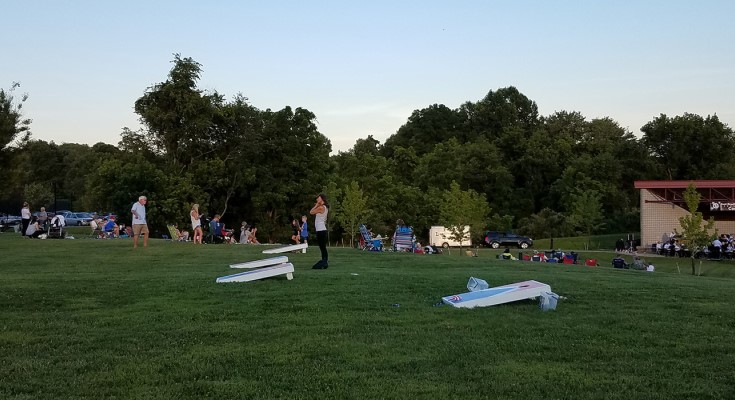
The most consequential element of East Bradford’s land-use policy has been its open-space program. Roughly 4,000 of the township’s nearly 10,000 acres, or about 40%, have been permanently preserved through acquisitions, conservation easements and partnerships with land trusts.
The program traces to a voter-approved earned income tax referendum adopted as development pressure increased in the region.
“The residents approved to tax themselves specifically for preserving open space as a primary means of helping to direct and responsibly manage the growth,” Director of Property and Recreation Rich Phifer said.
The preservation strategy has constrained opportunities for larger commercial tax-base growth while maintaining a mix of residential development, parks, preserves and undeveloped land.
East Bradford is now updating its zoning policies as economic and housing patterns change. Township Manager Mandie Cantlin said the municipality is largely built out, leaving only limited areas with additional development potential.
Officials have incorporated mixed-use opportunities and adjusted regulations to accommodate home-based businesses and changing operating hours. The township has also expanded support for agricultural tourism uses, including wineries, breweries, distilleries, and event barns.
Housing affordability and diversity are another focus. East Bradford’s housing stock is dominated by single-family homes, prompting officials to examine additional housing types in coordination with Chester County.
Accessory dwelling units are among the options being explored for households seeking space for aging parents or younger family members.
“Accessory dwelling units are in demand in East Bradford,” Cantlin said.
New development remains subject to environmental requirements covering woodlands, steep slopes, floodplains, riparian buffers and other natural resources.
At the same time, East Bradford is facing rising costs as infrastructure installed during earlier periods of development ages.
“One of our challenges now is that a lot of the development occurred about 30 years ago,” Cantlin said. “The infrastructure is all around the same age and all aging at about the same time.”
Finance Director Peggy Lennon pointed to a culvert replacement connecting East Bradford with West Chester Borough as an example of the financial pressure. A project initially expected to cost about $450,000 ultimately cost roughly twice that amount and took seven years to complete.
Lennon said grants can be more difficult to secure for roads, bridges, culverts and stormwater systems than for recreational projects such as trails and playgrounds.
The township has continued pursuing outside funding to reduce pressure on local taxpayers, Laverty said.
Stormwater management has also become a larger planning priority following damage from Hurricane Ida.
“We got hammered hard during Hurricane Ida,” Phifer said. “We learned some lessons from that, but also saw an important need to work with our partners to investigate how we could do things on a small and large scale to prevent that type of storm from damaging us again.”
East Bradford has partnered with the Brandywine Conservancy on a sustainability plan intended to strengthen green infrastructure and improve resilience throughout the watershed.
Cantlin said the township must also contend with stormwater entering from surrounding municipalities, making regional coordination part of its environmental strategy.
Transportation and recreation investments are increasingly overlapping with those planning goals.
The township is developing the Brandywine Trail and Plum Run Trail corridors as multimodal connections linking West Chester and neighboring communities with the Greater Philadelphia Circuit Trail Network.
East Bradford Park is also undergoing rehabilitation that will include ADA-accessible and inclusive playground facilities.
The township has pursued tourism through regional preservation efforts as well. It helped establish the Brandywine Valley Scenic Byway Commission, whose route later received state and national scenic-byway designations.
East Bradford also participated in developing the Harriet Tubman Underground Railroad Byway, which highlights abolitionist history and Underground Railroad sites throughout the region.
Officials credited partnerships with the Brandywine Conservancy, Natural Lands and North American Land Trust with helping the township reach its current level of preserved acreage.
“We would not be anywhere near 40 percent preserved without their support and the partnership,” Phifer said.
East Bradford also works with surrounding municipalities through regional councils of government and shared services while maintaining connections with West Chester University.
The township’s approach leaves it with a different growth model than nearby commercial centers: less emphasis on expanding the tax base through large-scale development and more reliance on preservation, residential investment, infrastructure management and incremental zoning changes.
That strategy is increasingly being tested by aging infrastructure, housing affordability and stormwater pressures — costs that officials must manage while maintaining the land-use policies that have defined East Bradford for decades.
To learn more and view the full article, visit Business View Magazine at www.businessviewmagazine.com.
Support the local news that supports Chester County. MyChesCo delivers reliable, fact-based reporting and essential community resources—free for everyone. If you value that, click here to become a patron today.