
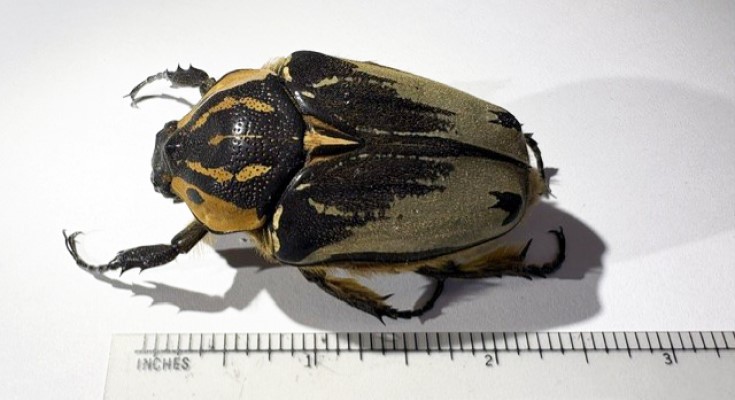
PHILADELPHIA, PA — U.S. Customs and Border Protection seized three live Chief Goliath beetles in Philadelphia from an outbound shipment bound for Germany, triggering a federal investigation into potential wildlife-trade violations involving a species considered increasingly rare in the wild.
CBP agriculture specialists seized the beetles Aug. 19 after officers inspected an air-cargo parcel from North Carolina that had been declared as “4x play toy,” according to the agency.
The package instead contained three large live beetles, a container holding beetle parts and two shadow boxes used to display insect specimens.
CBP submitted the live insects and photographs of the beetle parts to entomologists with the U.S. Department of Agriculture’s Animal and Plant Health Inspection Service.
The entomologists identified the live insects as three female Chief Goliath beetles, or Goliathus cacicus. The dead specimens were identified as three stag beetles from the Dorcus genus.
Chief Goliath beetles are native to African rainforests and are considered increasingly rare in the wild because of deforestation, agricultural expansion and harvesting for the international pet trade, according to CBP.
Federal wildlife inspectors asked CBP to seize the shipment as smuggled wildlife. Live beetles are considered wildlife and require U.S. Fish and Wildlife Service permits for import or export.
“The illegal trade of exotic pets brings hefty profits for those willing to risk destroying a wildlife species and violating U.S. laws and regulations,” Elliot N. Ortiz, CBP’s acting area port director in Philadelphia, said.
The live beetles were transferred to the USDA, while the remainder of the shipment was turned over to the U.S. Fish and Wildlife Service.
The Fish and Wildlife Service is investigating potential violations of the Endangered Species Act and Lacey Act related to the failure to declare a commercial wildlife export and trading in wildlife without a license.
CBP agriculture specialists inspect international shipments to prevent the introduction of foreign animal diseases and harmful plant pests and to enforce restrictions affecting agricultural and wildlife products entering or leaving the United States.
Support the local news that supports Chester County. MyChesCo delivers reliable, fact-based reporting and essential community resources—free for everyone. If you value that, click here to become a patron today.