
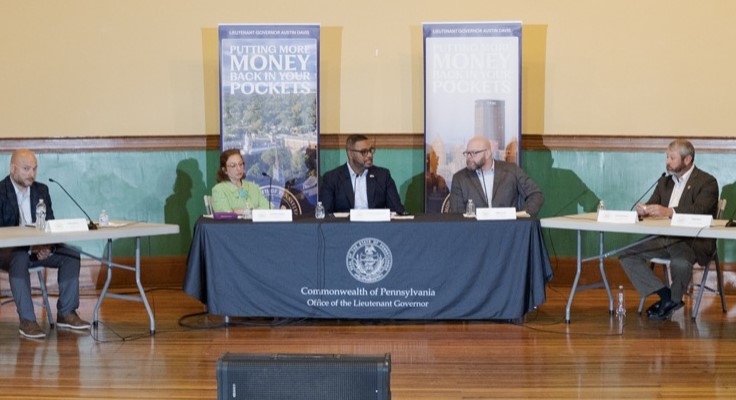
CONNELLSVILLE, PA — Pennsylvania officials are advancing a multi-pronged energy strategy aimed at lowering utility bills and expanding power production as households face sustained cost pressures, Lt. Gov. Austin Davis said Tuesday during a Fayette County roundtable.
What This Means for You
- Utility bill relief efforts could prevent rate increases and reduce long-term costs
- Expanded assistance programs remain available for struggling households
- New energy projects and incentives may impact jobs and local development
The discussion focused on rising electricity and heating costs and the state’s response, including consumer protections, expanded energy production, and financial assistance programs.
Davis said the administration is pursuing an “all of the above” energy strategy — a mix of traditional and alternative energy sources — to increase supply and stabilize prices.
“We’re also pushing back when utility companies and the electric grid managers have tried to gouge Pennsylvania consumers,” Davis said.
Assistance Programs Highlighted
State and nonprofit officials emphasized existing relief programs, including the Low Income Home Energy Assistance Program, or LIHEAP — a federally funded program that helps eligible households pay heating bills through direct payments to utility providers.
Jody Rose, representing the state Department of Human Services, said LIHEAP provides both standard and emergency grants and remains available for residents facing overdue bills, with applications open through May 8.
The Dollar Energy Fund, which offers utility assistance grants, reported increased demand as higher living costs strain household budgets.
Jobs and Energy Development
Labor representatives said expanding energy infrastructure could support employment while addressing supply constraints.
Michael Ford of the Pennsylvania Building Trades & Construction Council said proposed hydrogen energy hubs — large-scale facilities designed to produce and distribute clean hydrogen fuel — could create about 10,000 construction jobs.
Union leaders said workers are prepared to transition into emerging energy sectors as part of the broader energy strategy.
Policy Actions and Cost Impact
Officials pointed to several recent actions intended to reduce costs.
A proposed rate increase by PECO was withdrawn, preventing higher electricity and natural gas bills for 1.7 million customers and avoiding an estimated $510 million in additional costs.
The administration also secured an extension of a regional electricity price cap through 2030 via PJM Interconnection — the multi-state grid operator that manages wholesale electricity markets — projected to save consumers billions, including an estimated $806 for the average Pennsylvania household over four years.
Additional proposals include expanding manufacturing tax credits tied to energy projects, creating a state energy siting board to streamline approvals, and increasing rebates for energy-efficient appliances.
Efficiency and Consumer Control
Energy efficiency advocates said reducing demand remains one of the fastest ways to lower costs.
Programs such as time-of-use rates — which charge different prices depending on when electricity is used — and demand-response initiatives — where consumers reduce usage during peak periods — were highlighted as ways to give households more control over energy bills.
Tour Continues Across Commonwealth
The Fayette County event is part of Davis’ statewide “Putting More Money Back in Your Pockets” tour, which began earlier this month with stops in Montgomery and Luzerne counties and will continue in Carbon and Adams counties.
Support the local news that supports Chester County. MyChesCo delivers reliable, fact-based reporting and essential community resources—free for everyone. If you value that, click here to become a patron today.