
PITTSBURGH, PA — Pennsylvania is putting $125 million into a new program designed to expand venture capital, commercialize research and strengthen technology-driven industries, an investment state officials promoted Friday at Carnegie Mellon University as part of the Commonwealth’s 2026-27 budget.
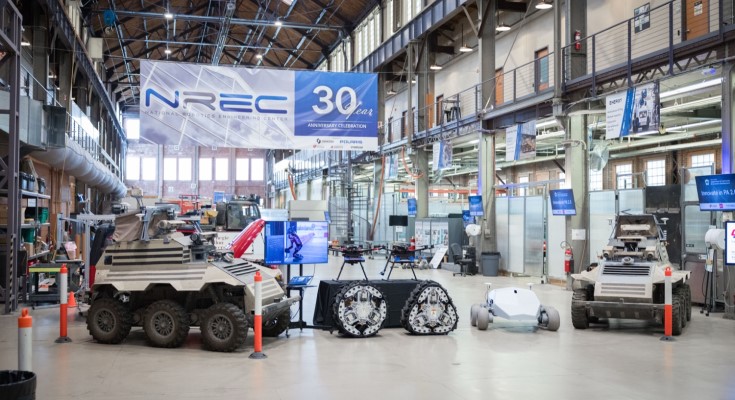
Department of Community and Economic Development Secretary Rick Siger joined Carnegie Foundry LLC at the National Robotics Engineering Center at Carnegie Mellon University’s Robotics Institute to outline the Innovate in PA 2.0 program. The funding was included in the state budget signed by Gov. Josh Shapiro.
The program is structured to increase access to venture capital, accelerate the commercialization of research and emerging technologies, establish a statewide clinical-trial network for life sciences and strengthen regional innovation networks. The state is targeting agriculture, energy, life sciences, manufacturing, robotics and technology.
The investment adds a new source of state capital aimed at moving research into commercial applications and helping young companies remain and expand in Pennsylvania.
Siger characterized the program as part of a broader effort to generate jobs and technological development in industries the state has identified as priorities.
“Investments like the Innovate in PA 2.0 program make Pennsylvania stronger by providing opportunities for job creation and technological advancement,” Siger stated.
Friday’s event put particular emphasis on robotics and artificial intelligence, industries in which Pittsburgh’s universities and research institutions have helped create a pipeline from academic research to commercial ventures.
Carnegie Foundry, a Pittsburgh-based robotics and AI venture studio, works with Carnegie Mellon’s National Robotics Engineering Center to develop and commercialize technology. The company provides product-development, business-strategy and other services for emerging companies and established businesses.
Carnegie Foundry founder and CEO Robert J. Szczerba said the organization has created three deep-technology companies to date, supported by its relationship with Carnegie Mellon and investors including United States Steel, Matthews International and Barber National Institute.
Herman Herman, director of NREC, pointed to earlier state investment in robotics commercialization as evidence of the potential economic impact.
“Strategic investment by the Commonwealth 30 years ago was pivotal to our success in transitioning robotics technology to commercialization, resulting in several billions of dollars in net economic impact to the region,” Herman stated. He said Innovate in PA 2.0 could support additional companies and jobs in life sciences, artificial intelligence and robotics.
The $125 million initiative sits alongside several other economic-development appropriations in the 2026-27 budget. Pennsylvania maintained $10 million for its Agricultural Innovation Grant Program and $20 million for Main Street Matters, while increasing funding for the Historically Disadvantaged Business Assistance Program by $3.75 million.
State officials have also pointed to recent expansion commitments by life sciences companies, including Johnson & Johnson, Eli Lilly, Eurofins Lancaster Laboratories, B. Braun, and GSK, as evidence of continued private-sector investment in Pennsylvania’s research and development economy.
Support the local news that supports Chester County. MyChesCo delivers reliable, fact-based reporting and essential community resources—free for everyone. If you value that, click here to become a patron today.