
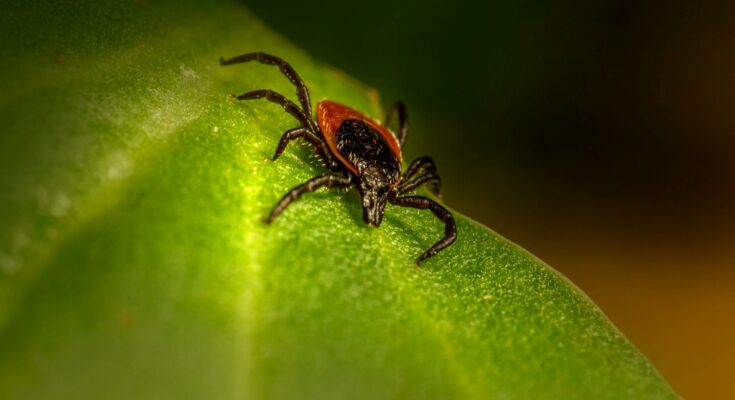
WASHINGTON, D.C. — Federal health agencies are investing nearly $3 million in experimental wildlife-based tick control methods aimed at reducing the spread of Lyme disease, alpha-gal syndrome and other tickborne illnesses as infections increase across the United States.
The Department of Health and Human Services is directing the funding through the Centers for Disease Control and Prevention and the National Institutes of Health to two regional research centers that will test whether treating deer and rodents can suppress tick populations and interrupt disease transmission.
The research represents an effort to control ticks through the animals that sustain their populations rather than relying exclusively on measures that protect individuals from bites.
The projects will be conducted by the New England Center of Excellence in Vector-borne Diseases and the Midwest Center of Excellence for Vector-Borne Disease, two members of a CDC-supported research network established in 2017.
One project will evaluate acaricide-treated feed for deer, which serve as primary hosts for adult blacklegged ticks and lone star ticks. Acaricides are chemicals used to kill ticks.
Researchers will examine whether exposing ticks to the chemicals while they feed on deer can prevent females from completing the blood meals necessary to produce eggs, potentially reducing subsequent generations.
The second project will test bait delivery systems for rodents, which are important hosts for immature blacklegged ticks and can carry the bacteria responsible for Lyme disease.
Those systems will provide feed containing acaricides, antibiotics or both. The combined approach is intended to kill ticks feeding on rodents while reducing the presence of disease-causing pathogens in infected animals.
The rodent-targeted strategy could address two components of Lyme disease transmission: the number of ticks surviving to later life stages and the proportion that acquire infection from animal hosts.
Both approaches remain experimental. The studies will evaluate whether wildlife-targeted treatments can produce meaningful reductions in local tick populations and support broader control efforts.
Tick control presents a persistent public health challenge because established populations are difficult to eliminate and depend on wildlife hosts distributed across large geographic areas.
Federal estimates indicate that nearly 31 million people in the United States may experience tick bites annually, while more than 500,000 Americans are diagnosed with tickborne diseases each year.
The growing geographic distribution of ticks has increased pressure on public health agencies to develop control methods that extend beyond personal protective measures.
“This effort is designed to move tick control forward by evaluating large-scale deployment of wildlife-targeted interventions,” said Lyle Petersen, director of the CDC’s Division of Vector-Borne Diseases.
The research also addresses two different disease concerns. Blacklegged ticks are major vectors of Lyme disease, while lone star ticks are associated with alpha-gal syndrome, an allergic condition that can develop following certain tick bites.
HHS Secretary Robert F. Kennedy Jr. described the initiative as an attempt to interrupt tick reproduction and feeding cycles before they result in additional human exposure.
The CDC established its Centers of Excellence in Vector-Borne Diseases in 2017 to support applied research, professional training and collaboration between academic institutions and public health agencies.
The latest projects will use that network to assess whether treating wildlife hosts can become a practical component of community-level tick management.
The National Institutes of Health will also continue research into the biological and immunological effects of tickborne illnesses, including approaches to improving diagnosis and treatment.
Support the local news that supports Chester County. MyChesCo delivers reliable, fact-based reporting and essential community resources—free for everyone. If you value that, click here to become a patron today.