
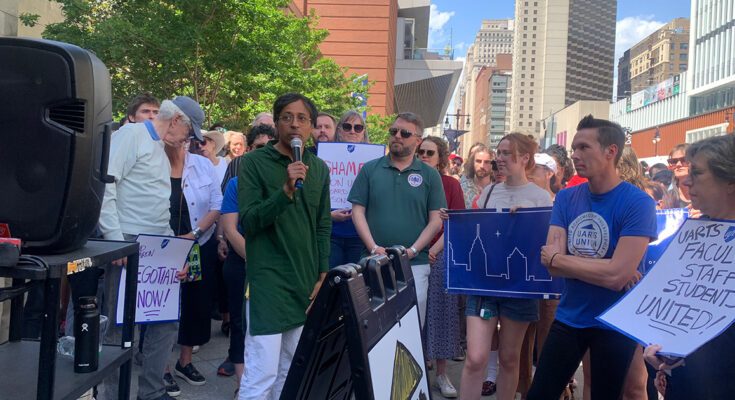
PHILADELPHIA, PA — Pennsylvania state Sen. Nikil Saval is proposing legislation to authorize Philadelphia to increase its sales and use tax and dedicate the additional revenue to cultural institutions and public facilities, creating a recurring funding source for a sector facing financial pressure and institutional closures.
The proposal would allow the city to collect additional revenue from purchases within Philadelphia and distribute the proceeds to museums, theaters, galleries, libraries, parks, recreation centers and other eligible public assets.
Saval, a Philadelphia Democrat who chairs the Senate Urban Affairs and Housing Committee for his party, is seeking to establish a funding mechanism modeled on Allegheny County’s Regional Asset District, which has generated more than $5.5 billion for public and cultural facilities since its establishment in 1993.
The proposal would require state legislative action to authorize the additional local tax. It does not establish a new tax or immediately change Philadelphia’s existing sales tax rate.
The initiative follows financial difficulties and closures affecting Philadelphia cultural institutions, including the University of the Arts and Philadelphia History Museum.
Saval’s announcement also cites a September closure of the Academy of Natural Sciences museum as evidence of the sector’s financial instability.
The funding proposal would shift part of Philadelphia’s cultural financing toward recurring tax revenue, reducing reliance on individual grants and other funding sources that may not provide consistent operating support.
“The decades of underfunding threaten the cultural and economic vibrancy of our city and the stability of our communities,” Saval said.
“We have an opportunity to make a generational investment in our arts and cultural institutions, parks, and civic spaces—preserving these treasured community assets and expanding public access.”
The proposal draws directly from Allegheny County’s Regional Asset District, which was established in 1993 and financed through a 1-percentage-point increase in the county’s sales and use tax.
The district has directed revenue toward regional cultural and recreational assets, providing an existing Pennsylvania model for using consumption taxes to support public institutions.
Saval’s proposal would adapt that structure to Philadelphia, although the announcement does not specify the size of the proposed tax increase.
The distinction matters because the revenue generated would depend on the rate ultimately authorized and the volume of taxable transactions within the city.
The Greater Philadelphia Cultural Alliance has endorsed the initiative, arguing that sustained public investment is necessary to address the financial pressures facing arts and heritage organizations.
“Philadelphia’s arts and cultural sector is at a critical crossroads, and we cannot continue to rely on short-term solutions to address long-term challenges,” said Patricia Wilson Aden, the alliance’s president and chief executive officer.
Aden said establishing a dedicated fund would require cooperation among state lawmakers, the administration of Mayor Cherelle Parker, Philadelphia City Council and cultural organizations.
The proposal also has implications for employment and economic activity beyond the institutions receiving funding.
Philadelphia’s arts and cultural sector generates an estimated $2.2 billion in economic impact and supports tens of thousands of jobs, according to figures cited in Saval’s announcement.
Cultural institutions attract visitors who also spend money at restaurants, hotels, retailers and other businesses, connecting the sector’s financial condition to the city’s broader tourism and hospitality economy.
The legislation would seek to stabilize those institutions by providing revenue that could support regular operations and longer-term financial planning.
Organized labor has also backed the initiative.
April Gigetts, president of AFSCME District Council 47, and Halcyone Schiller, president of AFSCME DC47 Local 397-Philly Cultural Workers United, said the funding challenges facing museums, libraries and other institutions threaten both employment and public access to cultural services.
“When it thrives, our city’s arts and culture sector supports tens of thousands of jobs, enriches residents’ quality of life, and attracts tourists from all over the world,” the union leaders said in a joint statement.
“But it is not thriving.”
The proposal follows voter approval of a Philadelphia ballot measure establishing a formal place for arts and culture within city government, reflecting public support for a more permanent municipal role in the sector.
Saval is positioning the proposed tax authority as a way to translate that support into an ongoing financial commitment.
The legislation would give Philadelphia an additional revenue option, but its implementation would depend on approval by state lawmakers and subsequent city action.
If authorized and adopted, the funding mechanism could provide museums, libraries, recreational facilities and other qualifying institutions with a recurring source of public revenue rather than requiring them to compete exclusively for periodic appropriations and grants.
The proposal comes as Pennsylvania Democrats prepare to take control of both legislative chambers and the governor’s office in January 2027, following their November election victories. That shift could affect the legislation’s prospects, although Democratic control does not guarantee passage.
Support the local news that supports Chester County. MyChesCo delivers reliable, fact-based reporting and essential community resources—free for everyone. If you value that, click here to become a patron today.