
WASHINGTON, D.C. — U.S. employers added 162,000 jobs in August, far exceeding economists’ forecasts as hiring strengthened in manufacturing and construction, a rebound that shifted attention back toward persistent inflation and the Federal Reserve’s next interest-rate decision.
The unemployment rate held at 4.1%, while the labor force expanded by 683,000 people and the participation rate increased to 61.6%, according to the Bureau of Labor Statistics. Economists surveyed by Reuters had expected payroll growth of about 65,000.
The figures marked a sharp acceleration from recent months. June and July payroll estimates were revised upward by a combined 55,000 jobs, while the three-month average increased to 71,000.
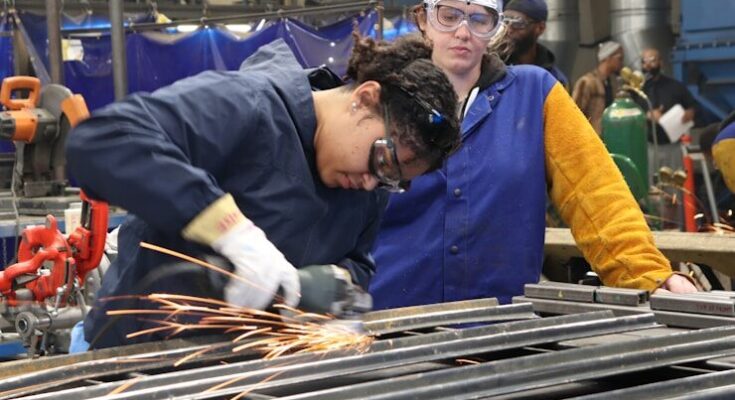
Private employers added 127,000 jobs in August. Goods-producing industries contributed 41,000, including 22,000 construction jobs and 16,000 manufacturing positions.
Services accounted for much of the overall increase. Leisure and hospitality employment rose by 62,000, while private education and health services added 29,000 jobs. Information employment declined by 23,000 and financial activities lost 11,000 positions.
The White House seized on the manufacturing and construction gains as evidence that President Donald Trump’s economic policies are encouraging domestic investment. Spokesman Kush Desai attributed the figures to the administration’s “reindustrialization agenda,” while National Economic Council Director Kevin Hassett argued that tariffs and tax incentives were encouraging companies to bring activity back to the U.S.
The administration’s characterization goes beyond what the monthly employment report itself establishes. The BLS data measure changes in employment but do not attribute those changes to particular presidential policies.
The report nevertheless showed gains in sectors the administration has emphasized. Manufacturing added 16,000 jobs after gains of 13,000 in June and 14,000 in July, while construction employment increased by 22,000 following an 18,000 gain in July.
Wage growth was more moderate. Average hourly earnings increased 3.1% from a year earlier, easing slightly from July and suggesting that labor costs were not accelerating alongside the stronger hiring.
The hiring rebound immediately fed into the interest-rate outlook. Treasury yields rose after the report as investors increased expectations that the Federal Reserve could raise rates at its Sept. 15-16 meeting, with persistent inflation remaining a central concern for policymakers.
Citigroup pushed its forecast for the Federal Reserve’s next interest-rate cut into 2027 following the employment report, citing the stronger labor market and the likelihood that policymakers will remain focused on inflation.
The August figures leave the labor market considerably stronger than suggested by the preceding months, but they do not resolve broader pressures facing the economy. Long-term unemployment increased, and the median duration of unemployment reached 11.4 weeks, near its highest level in more than four years.
The next major test for the economic outlook will come from inflation data ahead of the Fed meeting, with the stronger labor market giving policymakers more room to focus on price pressures rather than employment weakness.
Support the local news that supports Chester County. MyChesCo delivers reliable, fact-based reporting and essential community resources—free for everyone. If you value that, click here to become a patron today.