
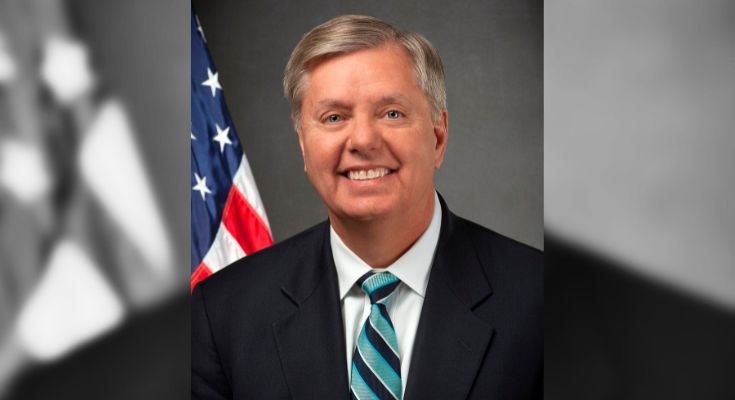
WASHINGTON, D.C. — U.S. Sen. Lindsey Graham, a South Carolina Republican who spent more than three decades in Congress and became one of the Republican Party’s most influential voices on foreign policy and the federal judiciary, died Saturday evening following what his office described as a brief and sudden illness. He was 71.
Graham had represented South Carolina in the Senate since 2003 after serving four terms in the U.S. House of Representatives. His death comes as he was seeking a fifth Senate term and is expected to trigger a special Republican primary to determine the party’s nominee for the November election.
According to a statement released by his office, Graham died on the evening of Saturday, July 11. His family requested privacy, and no additional details about the illness were immediately released. Multiple news organizations reported that emergency personnel responded to Graham’s Capitol Hill residence after a cardiac arrest.
Before entering elected office, Graham served in the U.S. Air Force Judge Advocate General’s Corps from 1982 to 1988, including as chief prosecutor in Europe. He later continued his military career in the Air Force Reserve, retiring as a colonel after more than three decades of service.
Graham entered politics in the early 1990s, serving in the South Carolina House of Representatives before winning election to the U.S. House in 1994. Representing South Carolina’s 3rd Congressional District, he became one of the House managers during President Bill Clinton’s 1998 impeachment proceedings.
He won election to the Senate in 2002 following the retirement of Sen. Strom Thurmond and was reelected in 2008, 2014 and 2020. Over more than two decades in the Senate, Graham emerged as a leading voice on national security, defense and judicial nominations.
Earlier in his Senate career, Graham earned a reputation as a bipartisan dealmaker, working with colleagues on immigration reform, climate policy and judicial issues while maintaining a close alliance with the late Sen. John McCain.
His political trajectory shifted after the 2016 presidential campaign. Although Graham was initially one of Donald Trump’s sharpest Republican critics during the primary, he later became one of Trump’s closest congressional allies and advisers, particularly on foreign policy and judicial appointments.
As chairman of the Senate Judiciary Committee from 2019 to 2021, Graham oversaw confirmation proceedings for Supreme Court nominees Brett Kavanaugh and Amy Coney Barrett, helping solidify the Court’s conservative majority.
At the time of his death, Graham was serving as chairman of the Senate Budget Committee and remained a prominent Republican voice on defense, international affairs and fiscal policy. He had recently returned from a trip to Ukraine and was active in debates over U.S. foreign policy.
Support the local news that supports Chester County. MyChesCo delivers reliable, fact-based reporting and essential community resources—free for everyone. If you value that, click here to become a patron today.