
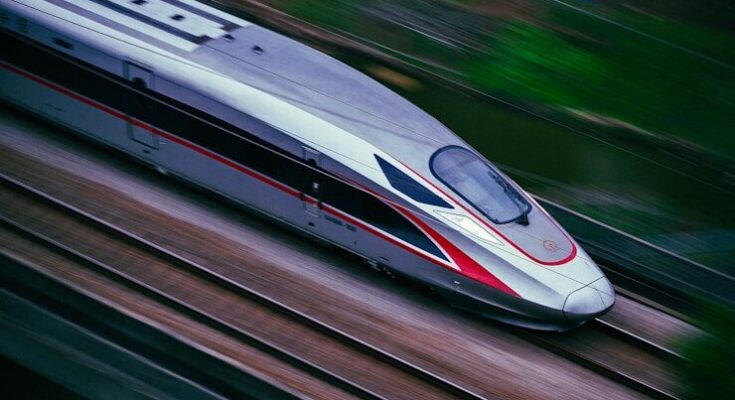
WASHINGTON, D.C. — The Federal Railroad Administration is revising train-noise standards to accommodate high-speed rail operating above 160 mph, a regulatory change the agency estimates will save developers $100 million over 30 years and remove a barrier to faster passenger systems.
Existing federal standards focus on engine and mechanical noise, according to the Transportation Department, without accounting for aerodynamic noise that becomes more significant at higher speeds.
The revised framework establishes an alternative standard for trains operating between 160 and 220 mph. It also creates an approval pathway for systems exceeding 220 mph, including magnetic-levitation trains.
Traditional noise limits will remain in place for trains operating at speeds of up to 160 mph.
The guidance also removes requirements that the department characterized as outdated and likely to require costly modifications to modern trainsets.
“One of the reasons we don’t have true high-speed rail in the United States is because current rules disadvantage trains that generate most of their noise from sources other than their engines and rolling stock,” FRA Administrator David Fink stated.
Fink said the revised approach evaluates train noise more broadly and is intended to remove “a major obstacle” facing operators seeking to run high-speed service.
Transportation Secretary Sean P. Duffy said the change is designed to make U.S. high-speed rail projects more attractive to private businesses and investors.
“This administration is cutting through the red tape that has stopped rail innovators from building in America before,” Duffy stated.
The department did not identify specific projects expected to use the revised standards or provide a timetable for when trains operating under the new framework could enter service.
Support the local news that supports Chester County. MyChesCo delivers reliable, fact-based reporting and essential community resources—free for everyone. If you value that, click here to become a patron today.