
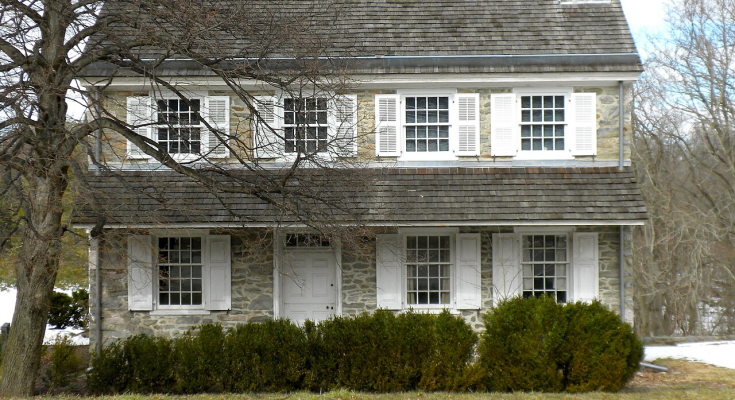
On a quiet morning, mist hangs above the Schuylkill River as it curls around the northern edge of the township. Along Route 23, cyclists glide toward Valley Forge while deer slip through the woods below Valley Forge Mountain. Stone farmhouses emerge from behind ancient oaks, their weathered walls catching the first light of day. In the distance, church bells from nearby Phoenixville drift across the valley.
It is an uncommonly peaceful landscape for a place so closely tied to some of the most consequential moments in American history.
The roads are busy now. Neighborhoods fill hillsides that once held farms. Commuters move daily between Phoenixville, King of Prussia, and Great Valley. Yet Schuylkill Township remains defined by something older than development—a landscape where the stories of soldiers, statesmen, abolitionists, millers, and settlers remain woven into the terrain itself.
That legacy feels especially important today.
As communities throughout southeastern Pennsylvania continue to grow, Schuylkill Township occupies a unique position between preservation and progress. Its proximity to Valley Forge National Historical Park, its concentration of nationally significant historic properties, and its commitment to protecting open space have created a place where history is not confined to museums. It remains embedded in the roads people travel, the homes they pass, and the hillsides that frame everyday life.
Long before the arrival of European settlers, Lenape communities lived along the Schuylkill River and Pickering Creek.
The waterways provided transportation, food, and access to a larger network of Indigenous settlements throughout the region. The township’s name itself reflects the earliest European arrivals. In the mid-seventeenth century, Dutch and Swedish explorers charted the area, giving the waterway its name—”Schuylkill,” or “Hidden River,” a fitting description for a river whose mouth was easily missed from the Delaware. Their early encounters paved the way for the English, Welsh, and German farming families who arrived in the early eighteenth century, encountering a landscape already shaped by generations of Lenape activity as they settled along the wooded valleys.
The river shaped everything that followed.
Settlers established farms, mills, and forges along its tributaries. Pickering Creek powered early industry. Roads emerged where geography allowed. Families such as the Andersons and Moores built substantial stone homes that would become fixtures of the colonial landscape.
By the time revolution swept through the colonies, Schuylkill Township had become strategically important.
Just beyond its eastern boundary, thousands of Continental soldiers endured the brutal winter at Valley Forge. Within the township itself, farms, mills, and ironworks supported the war effort. The landscape became part of the vast logistical network that sustained Washington’s army through one of its most difficult chapters.
No figure is more closely associated with that transformation than Baron Friedrich von Steuben.
Today, visitors can still stand inside the stone headquarters where the Prussian officer developed the training methods that helped transform a collection of volunteers into a disciplined fighting force. The modest structure offers little hint of its significance. Yet within those walls, von Steuben drafted drills and organizational systems that would shape the American military long after the Revolution ended.
A short distance away stands Moore Hall, another witness to the nation’s founding.
Built during the colonial era, the handsome Georgian estate served as headquarters for Col. Clement Biddle during the Valley Forge encampment. It also hosted a congressional committee that met to reaffirm confidence in George Washington’s leadership at a moment when political tensions threatened the war effort.
The house remains a reminder that history often unfolds far from battlefields.
Sometimes it happens around dining tables and in quiet meeting rooms.
Schuylkill Township’s historical significance extends well beyond the Revolution.
At White Horse Farm, abolitionist Elijah F. Pennypacker turned his home into an active Underground Railroad station during the nineteenth century. Freedom seekers found shelter there as they moved north through Pennsylvania, aided by a network of individuals willing to risk their reputations and livelihoods in pursuit of a moral cause.
The stone farmhouse still stands.
Its walls witnessed acts of extraordinary courage that unfolded largely in silence, carried out by people who believed principle mattered more than comfort.
That spirit of stewardship continues to define the township today.
Properties such as the Moses Coates Jr. Farm and Matthias Pennypacker Farm preserve the agricultural traditions that once dominated the region. Their stone barns, springhouses, and farm lanes speak to generations of labor that transformed forested land into productive farms. Together, they create a landscape that remains remarkably intact despite the pressures of modern development.
Nature plays an equally important role in the township’s identity.
The Schuylkill River forms a natural boundary to the north while Valley Forge Mountain rises to the south, creating a dramatic setting that has influenced settlement patterns for centuries. Wooded slopes, stream valleys, and preserved open spaces provide both ecological value and a sense of continuity that is increasingly rare in suburban Pennsylvania.
For residents, that balance is part of the appeal.
The township offers proximity to employment centers, highly regarded schools, and regional amenities while retaining a distinctly rural character. Trails connect neighborhoods to open space. Historic properties remain visible parts of the landscape rather than isolated artifacts. The result is a community that feels connected to its past without being trapped by it.
Perhaps no family embodies that connection better than the Andersons.
Patrick Anderson fought in the French and Indian War, helped organize Chester County’s early militia efforts, and served throughout the Revolution. His son, Isaac Anderson, carried dispatches during the war before later serving in Congress, where he supported the Louisiana Purchase. Their lives illustrate how local landscapes often produce national figures whose stories begin far from centers of power.
As evening settles over the river valley, long shadows stretch across stone walls and rolling fields. The Schuylkill reflects the fading light while Valley Forge Mountain darkens against the horizon. Traffic continues along Route 23, carrying commuters home through a landscape that has witnessed centuries of change.
The river keeps moving.
It did when the Lenape camped along its banks. It did when Washington’s army struggled through winter. It did when freedom seekers passed quietly through the countryside.
And in Schuylkill Township, it continues to remind residents that history is not merely remembered here.
It still flows through the landscape itself.
Support the local news that supports Chester County. MyChesCo delivers reliable, fact-based reporting and essential community resources—free for everyone. If you value that, click here to become a patron today.