
The train idles for a moment longer than expected, doors open, a low mechanical hum filling the space between arrivals and departures. A handful of commuters step onto the platform, some moving quickly toward parked cars, others lingering just long enough to check a phone, adjust a bag, take a breath. Beyond the tracks, Route 30 carries a steady stream of traffic—headlights, brake lights, the constant rhythm of movement that defines the corridor.
In Thorndale, everything seems to begin and end in motion.
The station marks the western edge of SEPTA’s line, but it doesn’t feel like an endpoint. It feels like a hinge—something that connects rather than concludes. The people stepping off the train are not arriving in isolation; they are folding back into a place built around access, proximity, and the quiet efficiency of getting somewhere else.
That dynamic is what makes Thorndale matter now. As central Chester County continues to evolve—balancing growth between Coatesville and Downingtown, reshaping older commercial corridors into something more modern—Thorndale has emerged as a kind of anchor point. Not because it demands attention, but because it organizes it.
“It’s where everything meets,” a daily commuter says, gesturing toward the tracks, then the road beyond. “You’ve got the train, the highway, the businesses—it all lines up.”
That alignment didn’t happen all at once.
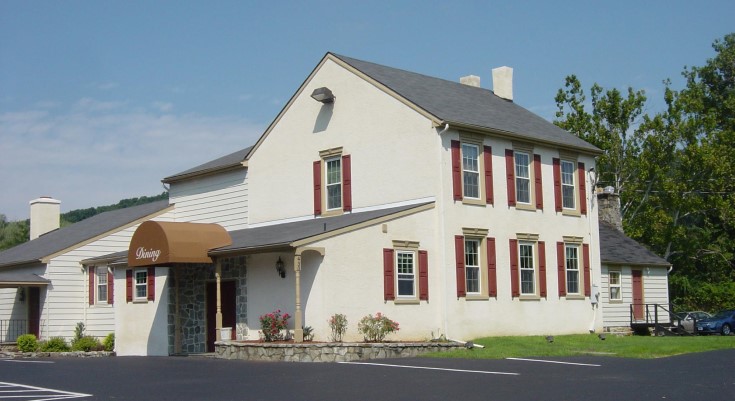
Thorndale’s history carries a different kind of stillness. On a rise not far from the roadway, a stone house sits with a composure that feels almost deliberate. It once served as the summer retreat of President James Buchanan, its thick walls and balanced façade offering a quieter counterpoint to the pressures of public life. Today, the structure remains, absorbed into a landscape of recreation and routine, its presence less announced than understood.
The contrast is telling.
Where the house suggests retreat, the surrounding community reflects acceleration. Beginning in the late 20th century, Thorndale shifted—older homes gave way to commercial uses, open parcels filled in, and the corridor along Route 30 Business took on a more defined identity. What emerged was not a traditional downtown, but something more functional: a network of plazas, storefronts, and service spaces designed for use rather than display.
“It’s practical,” a local business owner says, leaning against a counter between customers. “People come here because they need something—and they know they’ll find it.”
That practicality extends into daily life.
Most residents move by car, their routines shaped by commute times that remain manageable, predictable. Routes 30 and 340 carry them east and west, while the station offers an alternative—direct access to Philadelphia, a different kind of connection that broadens the boundaries of where Thorndale fits.
Yet for all that movement, the place itself holds a kind of steadiness.
The neighborhoods, set just beyond the commercial edges, feel measured. Homes are maintained without excess, streets active but not crowded. Median incomes and property values suggest stability, but the more telling detail is how the community absorbs change without losing its center.
At Caln Elementary School, that center becomes visible in a different way. Parents gather at pickup, conversations overlapping in small clusters, the rhythm of arrival and departure echoing the one at the train station—short pauses, repeated daily, forming something larger over time.
“It’s the kind of place where you recognize people,” a parent says, watching a child run ahead toward the car. “Even if you don’t know them, exactly—you’ve seen them before.”
That familiarity exists alongside growth, not in opposition to it.
Thorndale’s population has continued to climb modestly, its demographics reflecting a mix of backgrounds tied together less by identity than by function. It is a place people choose because it works—because it connects, because it offers access without the intensity of more urban centers.
Still, there are reminders of what has shifted.
The closure of Brandywine Hospital in 2022 left a gap that residents now navigate through nearby facilities, a subtle recalibration of how services are accessed. It is the kind of change that doesn’t redefine a place, but does reshape its daily patterns.
As evening approaches, the station fills again. Another train arrives, another group disperses. The light along Route 30 softens, turning reflective surfaces into something warmer, less defined. Traffic continues, but the urgency fades with the day.
Standing on the platform, the distinction between arrival and departure feels less important than the repetition of both.
“It’s not really the end of the line,” the commuter says, glancing down the tracks as the doors close behind them. “It’s just where you start from.”
The train pulls away, its sound receding into the distance. The platform empties. And in the space that follows—brief, quiet, almost unnoticed—Thorndale settles back into itself, not as a destination, but as the place that keeps everything moving.
Support the local news that supports Chester County. MyChesCo delivers reliable, fact-based reporting and essential community resources—free for everyone. If you value that, click here to become a patron today.