
READING, PA — Pennsylvania faces a projected shortage of roughly 185,000 homes by 2035 if current trends continue, prompting state officials to push for major investments and regulatory changes aimed at expanding housing supply and lowering costs.
What This Means for You
- The state projects a shortfall of 185,000 homes by 2035 without further action.
- The proposed 2026-27 budget includes a $1 billion housing and infrastructure initiative.
- Over 1 million Pennsylvania households spend more than 30% of their income on housing.
State Officials Spotlight Local Projects
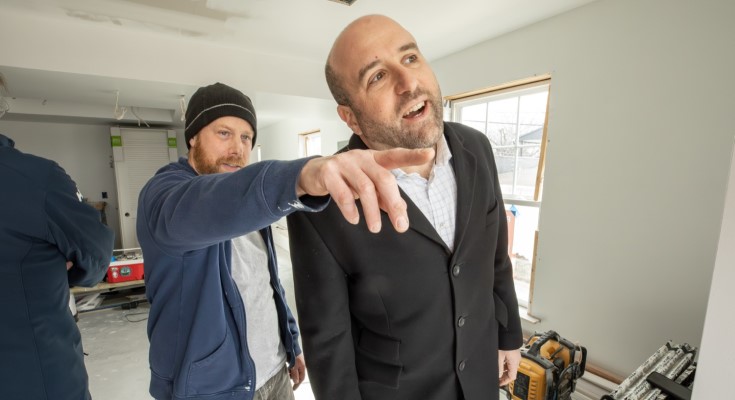
Pennsylvania Department of Community and Economic Development Secretary Rick Siger joined local leaders in downtown Reading to tour housing development projects and outline the administration’s Housing Action Plan.
The plan, unveiled last month, is the Commonwealth’s first comprehensive statewide housing strategy. It aims to build and preserve housing, modernize zoning and development regulations, and remove barriers that limit access to affordable homes.
Under current projections, more than half of Pennsylvania’s housing stock is over 50 years old, and more than 1 million households spend over 30% of their income on housing — a threshold commonly used to define housing cost burden.
Downtown Reading Developments
During the visit, officials toured two projects:
The 400 block of Penn Street redevelopment is a proposed $52 million mixed-use project that would convert the former Farmers National Bank Building and an adjacent structure into 150 residential units, including a new five-story in-fill building. The Commonwealth has invested $602,462 in improvements to Penn Street over the past five years.
Buttonwood Gateway, a revitalization effort in Northwest Reading, has transformed a formerly blighted industrial area into an affordable housing community. The state invested $536,250 through the Neighborhood Assistance Program to support construction in the area.
Secretary Siger said the projects demonstrate collaboration between state and local governments, nonprofit organizations, and private developers.
What the Housing Action Plan Proposes
The Housing Action Plan outlines five core goals: building and preserving housing stock, expanding housing opportunity, supporting residents facing instability, modernizing development regulations, and improving coordination across agencies.
To implement the plan, Gov. Josh Shapiro’s proposed 2026-27 budget calls for a $1 billion initiative funded through general obligation bonds. Proceeds would support housing construction and preservation, along with other infrastructure projects.
Additional proposals include capping rental application fees at actual screening costs, allowing tenants experiencing domestic violence to terminate leases without penalty, sealing certain eviction records, limiting lot rent increases in manufactured home communities, authorizing transfer-on-death deeds for primary residences to simplify property transfers, and updating the Municipalities Planning Code to streamline residential development approvals.
The budget proposal also would create a Deputy Secretary for Housing within DCED to oversee coordination and implementation of the plan.
Broader Housing Investments
Since 2023, the administration reports funding more than 1,000 projects through the Pennsylvania Housing Affordability and Enhancement Fund to build or repair over 8,200 housing units.
Other recent investments include expanded funding for the Homeless Assistance Program, emergency housing support for municipalities, and over $120 million awarded through the Whole-Home Repairs program to assist low- and moderate-income homeowners and landlords.
Officials said the Housing Action Plan is intended to address rising housing costs, aging infrastructure, and projected population needs across all 67 counties.
Support the local news that supports Chester County. MyChesCo delivers reliable, fact-based reporting and essential community resources—free for everyone. If you value that, click here to become a patron today.