
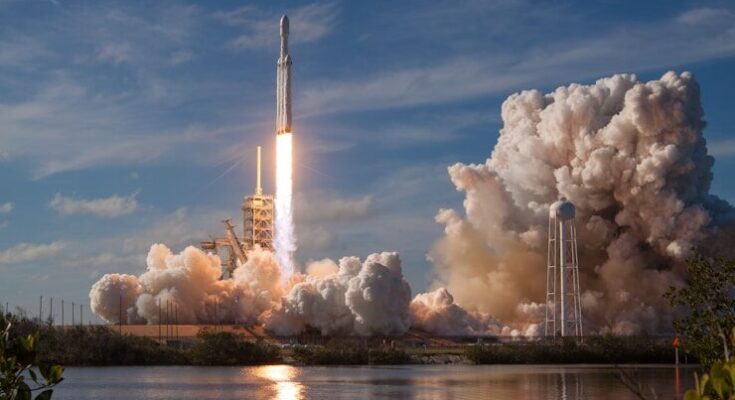
WASHINGTON, D.C. — President Donald Trump on Thursday directed federal agencies to expand US launch and reentry capacity to more than 1,000 operations annually by 2030, seeking to ease infrastructure constraints while strengthening commercial and national-security access to space.
The national space transportation memorandum orders agencies to open federal launch facilities more broadly to commercial operators, encourage private investment and accelerate permitting and environmental reviews. It replaces a policy adopted in 2013.
Trump described access to and from space as a “vital national and economic security interest,” linking the expansion to US military readiness, economic competitiveness and the growth of the commercial space industry.
The Defense Department and NASA must develop federal range-scheduling criteria within 180 days and regularly publish launch schedules. The agencies were also directed to coordinate infrastructure investments and establish transparent policies for recovering the cost of shared facilities and services.
The Transportation Department must identify potential locations for additional launch facilities, integrate launches and reentries into air-traffic modernization and designate priority airspace for critical launch corridors within the same 180-day period.
The Interior Department has 90 days to identify federal land for an additional reentry site. Transportation officials must assess safety standards for the location within 180 days, while the Commerce Department must produce a development plan within 240 days.
The policy also calls for measures allowing urgent civil or national-security launches within 48 hours of need, including from expeditionary locations. Federal agencies must assess regulatory, operational and technological barriers to that capability.
Commerce and the Federal Communications Commission were directed to secure spectrum access for launch, reentry, recovery and orbital operations. Defense and Homeland Security officials must separately report on measures needed to protect launch infrastructure on federal property.
The administration also ordered the development of a space transportation industrial-base strategy covering competition, supply-chain resilience and workforce development. The plan is due within 180 days and must be reviewed every two years.
Under the memorandum, US government payloads generally must travel aboard vehicles manufactured domestically. Exceptions include certain international programs, secondary scientific missions without a comparable US launch option and some hosted payload arrangements.
NASA and the Defense Department were told to favor commercial transportation services for government missions and avoid competing with private providers unless required for public safety or national security. The agencies must also maintain multiple ways to deploy government payloads and coordinate purchases to increase federal buying power.
NASA will develop a commercial lunar logistics architecture, examine private robotic transportation to Mars and explore commercial systems capable of carrying people to Mars and returning them to Earth.
The Defense Department was directed to pursue commercial in-space transportation and logistics services, consider those capabilities in military planning and explore relocatable launch equipment and other responsive systems.
The policy also instructs the State and Commerce departments to review export policies and controls within 120 days. The reviews are intended to expand foreign market access for US space companies while protecting intellectual property, national-security interests and nonproliferation commitments.
Requests involving commercial launches or reentries of foreign vehicles from US territory will receive case-by-case reviews. White House science and national-security officials must make a recommendation to the president within 60 days after receiving the required information.
Implementation is subject to existing law and the availability of congressional appropriations.
Support the local news that supports Chester County. MyChesCo delivers reliable, fact-based reporting and essential community resources—free for everyone. If you value that, click here to become a patron today.