
WASHINGTON, D.C. — Federal health officials have recommended new concentration and chemical-ratio thresholds for regulating potent opioid compounds associated with kratom, seeking to restrict concentrated products without subjecting natural botanical kratom containing trace amounts of the substances to Schedule I controls.
The Department of Health and Human Services submitted the revised recommendations to the Drug Enforcement Administration following a scientific review and public comments concerning 7-hydroxymitragynine, known as 7-OH, and mitragynine pseudoindoxyl, or MGPI.
The Department of Justice said DEA issued new Notices of Intent incorporating the recommendations, which would establish criteria for temporarily scheduling the compounds under the Controlled Substances Act.
Under the proposed framework, products containing either compound, or both combined, would meet the threshold for Schedule I control if concentrations exceed 1 milligram per gram in solid products or 1 milligram per milliliter in liquids.
Products would also meet the threshold if the ratio of mitragynine, the predominant alkaloid in kratom, to 7-OH, MGPI, or their combined amount is less than 100 to 1.
The two tests are independent. A product meeting either threshold would fall within the recommended scheduling criteria.
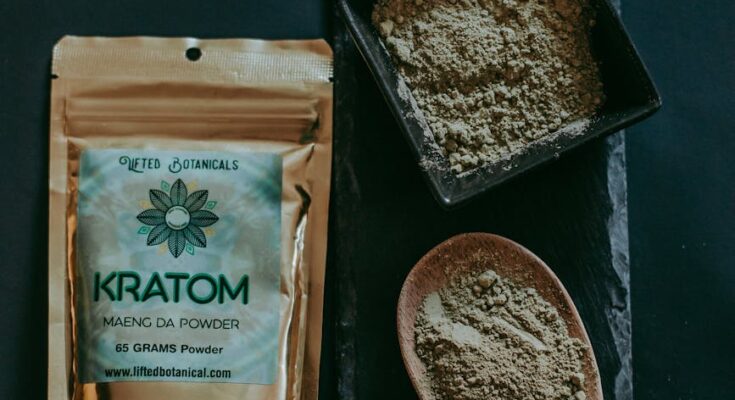
The approach is intended to distinguish products containing elevated concentrations of the compounds from botanical kratom, which can naturally contain trace amounts of 7-OH and potentially MGPI.
“We are drawing a clear line between natural kratom and dangerous, enhanced opioid products,” HHS Secretary Robert F. Kennedy Jr. said.
The revised recommendation follows federal efforts to regulate increasingly concentrated kratom-derived substances.
In July 2025, HHS recommended placing 7-OH above a specified threshold in Schedule I following a Food and Drug Administration scientific and medical evaluation.
DEA issued a notice of intent to temporarily schedule 7-OH above a specified threshold in July 2026, while HHS sought public comments on the proposed limits.
DEA subsequently temporarily placed MGPI and two synthetic 7-OH derivatives, MGM-15 and MGM-16, in Schedule I.
Those actions raised questions about whether naturally occurring trace amounts of MGPI could bring conventional botanical kratom products within federal drug controls.
The latest recommendation addresses that distinction by evaluating both the concentration of the compounds and their proportion relative to mitragynine.
FDA’s scientific review found that 7-OH demonstrated approximately two to nine times the potency of morphine in preclinical studies, depending on the research examined.
The agency also identified evidence that MGPI carries a meaningful risk of opioid-like physical dependence and withdrawal.
The findings underpin federal concerns about products formulated to deliver elevated concentrations of the substances.
Assistant Secretary for Health Brian Christine said the thresholds would provide DEA with a framework for distinguishing botanical kratom from products chemically altered or concentrated to contain higher levels of the compounds.
The recommendations do not establish a blanket Schedule I classification for natural kratom. Instead, they would determine which products containing 7-OH or MGPI fall within the specified temporary scheduling criteria.
HHS and FDA said they will continue working with DEA as the federal government develops its regulatory approach to concentrated and synthetic kratom-associated opioid compounds.
Support the local news that supports Chester County. MyChesCo delivers reliable, fact-based reporting and essential community resources—free for everyone. If you value that, click here to become a patron today.