
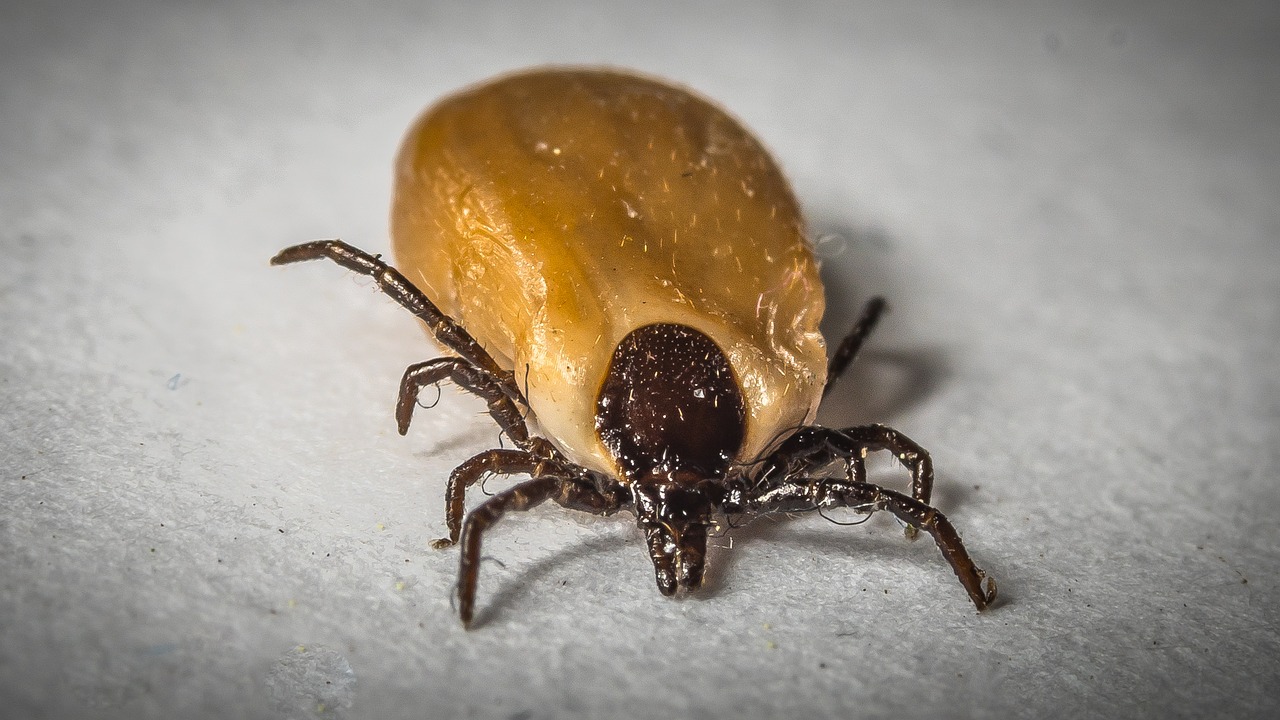
WASHINGTON, D.C. — The Department of Health and Human Services is launching a series of initiatives aimed at reducing Lyme disease and other tick-borne illnesses, including a new tick-control program, expanded research into Alpha-gal syndrome and up to $2.5 million in innovation prizes, as federal officials confront rising infection rates across the United States.
Health and Human Services Secretary Robert F. Kennedy Jr. unveiled the initiatives during a visit to New Hampshire, a state with one of the nation’s highest rates of Lyme disease.
The announcement comes as Lyme disease remains one of the fastest-growing vector-borne illnesses in the country. More than 476,000 Americans are diagnosed annually, while emergency-room visits related to tick bites recently reached their highest springtime level in nearly a decade, according to federal health data.
A centerpiece of the initiative is a new multi-million-dollar pilot program led by the Centers for Disease Control and Prevention and HHS that will focus on reducing tick populations before they transmit disease to humans.
The project will begin through the New England Center of Excellence in Vector-Borne Diseases and will involve collaboration with the Indian Health Service and the Wampanoag Tribe in Massachusetts.
Federal officials said the effort will target ticks on wildlife and seek to disrupt breeding cycles in areas with high disease prevalence.
HHS also reaffirmed a goal of reducing Lyme disease cases by 25% by 2035 compared with 2022 levels.
“Millions of Americans battling Lyme disease and other tick-borne illnesses have spent years searching for answers, treatment, and support,” Kennedy said. “Today, the Trump Administration is launching one of the most ambitious federal efforts ever to combat Lyme disease by accelerating research, expanding innovation, and improving care for patients and families.”
The department highlighted its existing research investments, noting that the National Institutes of Health currently spends nearly $50 million annually on Lyme disease research and approximately $122 million annually on broader tick-borne disease studies.
Another focus of the initiative is Alpha-gal syndrome, a tick-associated condition that can trigger allergic reactions to red meat and other mammalian products.
According to CDC estimates, nearly 500,000 Americans may be living with Alpha-gal syndrome. HHS reported that NIH has identified several potential products that could help prevent the condition after tick bites and is exploring collaborations with private-sector companies to evaluate those candidates through clinical research.
The department also announced three new LymeX innovation competitions with total prize funding of up to $2.5 million.
The programs include a public-awareness challenge offering up to $250,000, a treatment and drug-repurposing competition offering up to $250,000, and an artificial intelligence-focused challenge offering up to $2 million, including a $1 million grand prize.
The AI initiative is intended to explore how artificial intelligence and open data could help patients with Lyme disease and other difficult-to-diagnose illnesses obtain diagnoses and access care more quickly.
The new competitions build on the LymeX Innovation Accelerator, a public-private partnership between HHS and the Steven & Alexandra Cohen Foundation. Through that program, HHS recently launched a $10 million diagnostics competition focused on developing faster and more accurate Lyme disease tests.
Federal officials noted that two FDA-cleared Lyme disease diagnostic tests have reached the market through the LymeX ecosystem during the past two years.
HHS also announced a collaboration with the International Lyme and Associated Diseases Society. Through hhs.gov/lyme, patients will be able to access the organization’s clinician locator tool to identify providers experienced in treating Lyme disease and related conditions.
Kennedy additionally voiced support for reauthorizing the bipartisan Kay Hagan Tick Act, a law signed in 2019 that established a coordinated federal strategy for addressing vector-borne diseases. According to HHS, legislation extending the program recently advanced through the House Energy and Commerce Committee.
Additional information is available at https://www.hhs.gov/lyme.
Support the local news that supports Chester County. MyChesCo delivers reliable, fact-based reporting and essential community resources—free for everyone. If you value that, click here to become a patron today.