
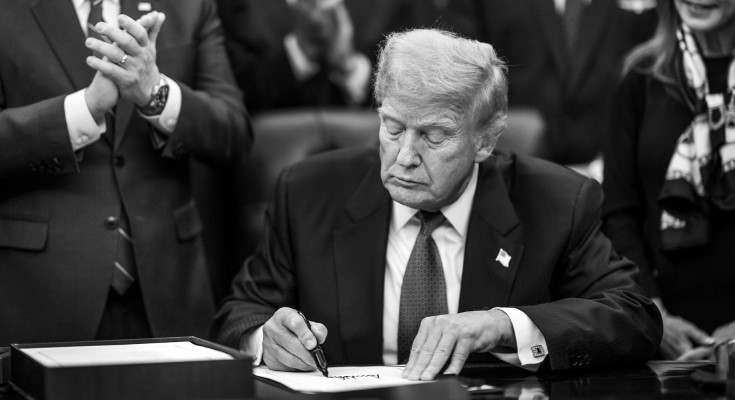
WASHINGTON, D.C. — Two bipartisan federal bills expanding Holocaust art recovery rights and extending small business research programs are now law after being signed Monday by President Donald Trump.
What This Means for You
- Holocaust survivors and heirs gain stronger legal path to recover looted art
- Small business innovation programs extended through 2031
- New rules tighten security and oversight for federal research funding
The legislation includes S. 1884, the Holocaust Expropriated Art Recovery Act of 2025, and S. 3971, the Small Business Innovation and Economic Security Act.
Holocaust Art Claims Expanded
S. 1884 permanently extends and strengthens a 2016 law that allows Holocaust survivors and their families to seek recovery of art seized by the Nazi regime.
The law removes a “sunset clause,” or expiration date, that would have ended the program in 2026, making the protections permanent.
It also limits certain legal defenses that defendants have used to dismiss claims without addressing the merits, including arguments that claims were filed too late or that ownership was established through long-term possession.
The measure clarifies that U.S. courts can hear cases involving property taken within Germany during the Nazi era, addressing a prior Supreme Court ruling that had restricted such claims.
The provisions apply retroactively to pending cases as well as new filings.
Supporters said the changes address longstanding barriers that prevented recovery of looted artwork, while some legal and museum groups raised concerns about increased litigation and challenges to established property claims.
Small Business Programs Reauthorized
S. 3971 reauthorizes the Small Business Innovation Research and Small Business Technology Transfer programs through September 30, 2031.
These programs provide federal funding to small businesses to support research and development projects, particularly in areas such as defense, health care, energy, and advanced manufacturing.
The law includes new national security screening requirements, directing federal agencies to review applicants for ties to foreign adversaries and restrict funding to certain entities with foreign ownership or influence.
New Funding and Oversight Measures
The legislation also creates a “Strategic Breakthrough” initiative allowing agencies with large research budgets to fund later-stage projects with awards of up to $30 million.
Additional provisions limit how many proposals a single company can submit annually, require faster funding decisions, and allow agencies to carry over unused funds from fiscal year 2026 into 2027.
Lawmakers said the changes are intended to improve oversight, reduce misuse of grant funding, and help more projects reach commercialization.
Legislative Support
The bills received bipartisan support in Congress.
S. 3971 passed the Senate unanimously and cleared the House by a 345–41 vote, while S. 1884 passed both chambers earlier this year before being sent to the president for signature.
Officials said the measures aim to strengthen legal rights for Holocaust restitution claims and maintain federal support for innovation-driven small businesses.
Support the local news that supports Chester County. MyChesCo delivers reliable, fact-based reporting and essential community resources—free for everyone. If you value that, click here to become a patron today.