
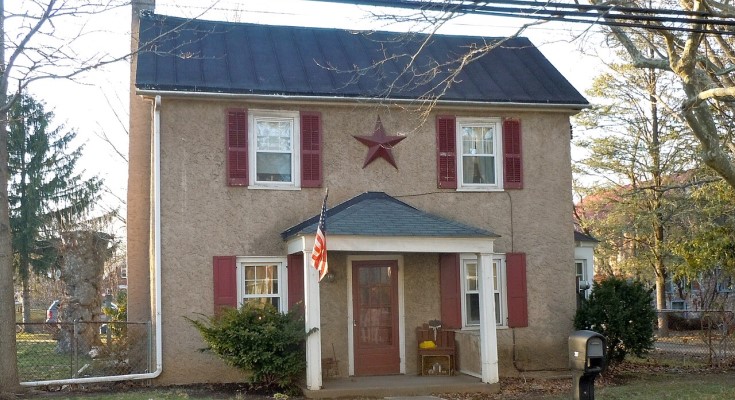
The Schuylkill River moves quietly past Pottstown Landing on a summer morning, its surface broken only by the wake of a passing duck and the occasional splash of a fish beneath the shade of overhanging sycamores. Along the old towpath, dew clings to wild grasses growing where mule teams once hauled canal boats loaded with coal, grain, and iron toward Philadelphia. The stone foundations, weathered houses, and narrow lanes of the village emerge slowly in the morning light, offering a glimpse into a world that seems surprisingly close.
Just up the hill, shoppers arrive at commercial centers along Route 100 while commuters merge onto nearby highways bound for jobs throughout southeastern Pennsylvania. Between these two scenes—one rooted in the canal age, the other unmistakably modern—lies the story of North Coventry Township.
It is a story that mirrors the evolution of Chester County itself. Once a landscape of German farmsteads, religious communities, and river commerce, North Coventry has transformed into a prosperous suburban township while preserving remarkable pieces of its past. At a time when communities throughout the region are searching for ways to balance growth with identity, North Coventry offers an unusual case study: a place where canal villages, historic inns, forests, churches, shopping centers, and centuries-old farms coexist within a few square miles.
The township’s history begins with faith, farmland, and opportunity.
German-speaking settlers arrived during the early eighteenth century, establishing farms across the rolling terrain south of the Schuylkill River. Families such as the Urners, Millards, and Schenkels helped transform the frontier landscape into a thriving agricultural community. Their influence remains visible in old farmhouses, road names, and the cultural traditions that shaped the township’s earliest generations.
Among their most enduring legacies is the Coventry Church of the Brethren.
Founded around 1724, the congregation is recognized as the oldest continuously used Church of the Brethren congregation in the United States. Long before highways and shopping centers arrived, families gathered here to worship according to traditions rooted in simplicity, humility, and community. The church became more than a place of worship; it served as a social anchor for settlers carving out lives in a still-developing corner of Pennsylvania.
The surrounding landscape still reflects that heritage.
Rolling fields give way to wooded ridges. Historic farmsteads sit back from winding roads. Portions of the township extend into the Hopewell Big Woods, one of the largest remaining forested landscapes in southeastern Pennsylvania. These woods, streams, and wildlife corridors provide an ecological counterbalance to the region’s ongoing suburban growth.
Yet if agriculture established North Coventry, transportation transformed it.
The arrival of the Schuylkill Navigation system in the 1820s changed the township’s fortunes dramatically. Canal boats connected inland communities to larger markets, bringing new opportunities for commerce and industry. Along the river, Pottstown Landing emerged as a bustling canal village where boatmen, merchants, and laborers lived and worked within sight of the water.
Today, the village remains one of the township’s most evocative historic landscapes.
Its modest stone and frame houses line quiet streets that still follow the patterns established during the canal era. The scale remains intimate. The river remains central. Walking through the district, it is not difficult to imagine a time when canal traffic determined the rhythm of daily life and the sound of mule hooves echoed along the towpath.
Nearby, Laurel Locks preserves another chapter of that transportation story.
The surviving canal lock, lock tender’s house, and adjacent farmstead create one of the most complete canal-era landscapes remaining in the region. Here, visitors can still see how agriculture and transportation worked hand in hand, with farms supplying goods that moved through the canal network connecting Reading, Pottstown, and Philadelphia.
Not every chapter of North Coventry’s history was conventional.
Just over the modern township line in East Coventry, a movement known as Free Love Valley briefly flourished during the mid-nineteenth century, casting a long shadow over the entire area. Led first by Theophilus Gates and later by Hannah Williamson, the community rejected traditional social norms and embraced a radical vision of religious and communal life. Though short-lived, the experiment became one of Chester County’s most unusual episodes, drawing widespread attention and controversy across the northern Coventry hills.
The hillsides have long since returned to quiet farmland.
Yet its story serves as a reminder that rural communities have often been places of innovation, dissent, and experimentation—not merely tradition.
North Coventry’s evolution accelerated again during the twentieth century.
Agriculture gradually gave way to residential neighborhoods and commercial development. The opening of Coventry Mall in 1967 signaled a new era, transforming the township into a regional retail destination. Businesses followed. Housing developments expanded. The population grew steadily as families sought access to employment centers throughout Chester, Montgomery, and Berks counties.
What emerged was not the disappearance of the old township but a layering of new identities atop old ones.
Historic villages survived alongside shopping centers. Forested preserves remained adjacent to growing neighborhoods. Weathered stone ruins and historic homesteads stood watch along winding back roads while modern traffic moved along nearby highways.
The township’s historic landmarks embody that coexistence particularly well.
The Swan Stagecoach Inn recalls a time when travelers moved by horse and carriage. Pottstown Landing preserves the canal era. Coventry Mall represents the automobile age. Each reflects a different chapter in the community’s development, yet all remain part of the same landscape.
Even the natural environment tells a story of continuity.
The Schuylkill River still defines the township’s northern edge. Canal remnants remain visible through stretches of woodland. Portions of the Hopewell Big Woods continue to provide habitat for wildlife and opportunities for recreation. Open-space preservation efforts have helped maintain pieces of the rural landscape that first attracted settlers more than three centuries ago.
As evening settles across North Coventry Township, sunlight fades over the Schuylkill River. Shadows stretch across the old canal prism at Laurel Locks. The streets of Pottstown Landing grow quiet. In the distance, the lights of modern commercial corridors begin to glow.
The contrasts are striking.
Yet together they tell the story of a community that never entirely abandoned any chapter of its past.
Instead, North Coventry accumulated them—farm by farm, lock by lock, church by church, road by road—until it became a place where nearly three centuries of southeastern Pennsylvania history can still be found within a single afternoon’s drive along the river.
Support the local news that supports Chester County. MyChesCo delivers reliable, fact-based reporting and essential community resources—free for everyone. If you value that, click here to become a patron today.