
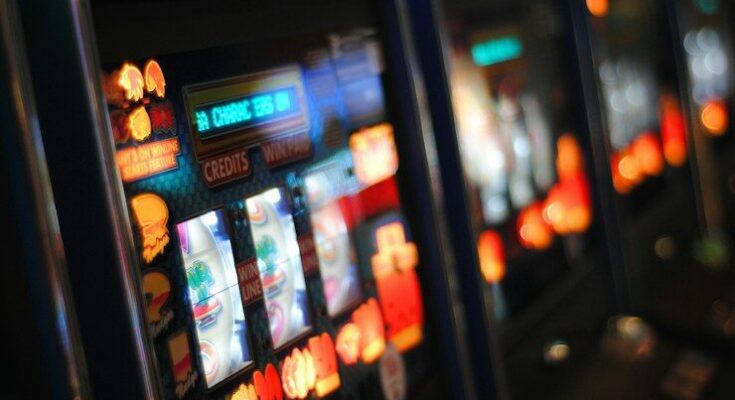
In June 2026, the Pennsylvania Supreme Court ruled that so-called “skill games” found in bars, restaurants, gas stations, and other places throughout Pennsylvania are, in fact, slot machines under the Gaming Act and Crimes Code. Because slot machines are only lawful in licensed casinos or other qualifying establishments approved by the Pennsylvania Gaming Control Board, the court gave the legislature a deadline to enact legislation before these illegal slot machines become subject to law-enforcement action and seizure.
The Oct. 13 deadline is approaching fast, so the General Assembly must work faster to enact a solution, because just letting the clock run out is not a responsible option. As lawmakers, we were given an opportunity to regulate these machines. It’s something I have called for since I started seeing them around my neighborhood, inside local convenience stores and close to schools.
Without regulation or oversight, these machines lack age restrictions and can attract criminal activity by holding large amounts of cash without extra security to keep workers and shoppers safe.
At the same time, Pennsylvania is missing out on substantial revenue that could be used to support vital public services. By authorizing the Pennsylvania Gaming Control Board to license and regulate a limited number of these machines, we can ensure they are taxed fairly, comparable to casinos, while also implementing safeguards to protect our communities.
That’s why I’ve introduced H.B. 1141, which would legalize and strictly regulate a limited number of machines, bring another useful revenue stream to Pennsylvania, and allow eligible businesses to keep using the machines, but with regulation and oversight.
Under the proposal, eligible establishments would be limited to qualifying licensed clubs and certain businesses that are both Pennsylvania Lottery sales agents and properly licensed under the state’s liquor laws.
My legislation would establish a comprehensive regulatory system for local gaming terminals under the Pennsylvania Gaming Control Board. Its stated legislative intent is to protect the public through regulation and policing of gaming while prohibiting gaming that is not expressly authorized by law.
The legislation would also impose significant restrictions intended to prevent an uncontrolled expansion of gambling. Participating establishments could operate no more than five terminals, and the legislation would establish a statewide maximum of 30,000 terminals.
Players would have to be at least 18 years old, gambling areas would have to be segregated from minors and monitored, and employees responsible for the gambling machines would receive mandatory age-verification and problem-gambling training.
The machines themselves would be subject to technical and financial controls, including a maximum of $5 wager per game, minimum payout requirements, and prize limitations.
A 49% Tax and Revenue for Pennsylvania
Unlike proposals that I previously opposed because of their tax structure, my legislation would impose a 49% tax on gross terminal revenue.
The legislation also creates a mechanism to support emergency-management programs, including grants associated with urban search-and-rescue programs.
While other bills were drafted around the business models of a particular gambling company or vendor, my legislation wasn’t written for one vendor, one manufacturer, or one segment of the gambling industry. It was drafted by considering what would be for the betterment of the Commonwealth.
There are things in this bill that the gambling industry may not like, things the gambling-machine industry may not like, and limitations that some businesses may not like. That’s what compromise looks like.
The PA Supreme Court’s ruling has increased the urgency of the debate. Recent reporting estimates that approximately 70,000 illegal gambling machines are operating across Pennsylvania, and absent legislative action, machines covered by the ruling could become subject to law-enforcement action once the court’s 120-day stay expires.
Lawmakers should use the remaining time to negotiate rather than allow competing interests to prevent action.
At the end of the day, we can continue fighting over who gets the biggest piece of the pie until the pie is removed, or we can sit down and solve the problem. There is a middle ground to consider, with protecting the public and legitimate small businesses and clubs at the forefront, a fair tax, and a limited number of machines and locations for easier oversight.
The clock is ticking. We know what happens if we do nothing. I believe my legislation gives us a responsible starting point for a compromise, and I am ready to sit down with anyone who is serious about getting this done and ensuring Pennsylvania, not one particular vendor, is the beneficiary.
Ed Neilson is a Democratic State Representative for Pennsylvania’s 174th Legislative District, serving Northeast Philadelphia since 2015, and is currently chair of the House Transportation Committee.
Support the local news that supports Chester County. MyChesCo delivers reliable, fact-based reporting and essential community resources—free for everyone. If you value that, click here to become a patron today.