
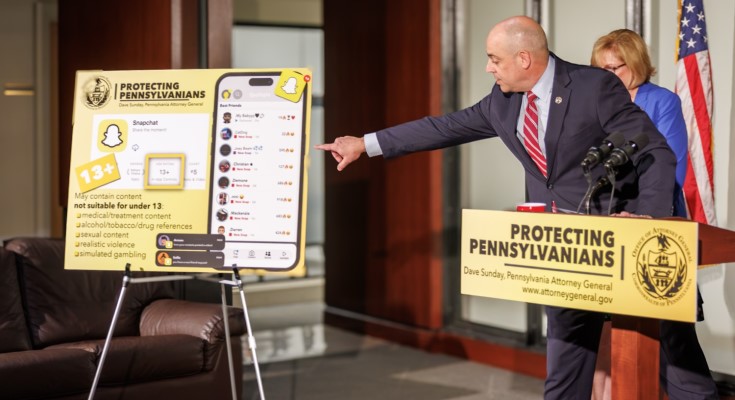
PHILADELPHIA, PA — Pennsylvania Attorney General Dave Sunday sued Snap Inc. on Aug. 25 in Philadelphia County Court, alleging the Snapchat operator violated state consumer-protection law by marketing the platform as appropriate for teenagers while concealing addictive design features and understating minors’ exposure to mature content.
The civil complaint seeks declaratory and injunctive relief under Pennsylvania’s Unfair Trade Practices and Consumer Protection Law, along with civil penalties for alleged willful violations, litigation costs and other relief. The state is asking the court to temporarily and permanently bar Snap from practices that violate the law.
The lawsuit broadens Pennsylvania’s regulatory push against social-media platforms over their treatment of minors. Sunday filed similar litigation against TikTok earlier this month and is also engaged in litigation against Meta, according to the Attorney General’s Office.
Pennsylvania’s case against Snap centers on three claims: that Snapchat’s age ratings misrepresent the platform’s suitability for minors, that Snap fails to disclose allegedly addictive design features, and that those design and safety features themselves constitute unfair practices under state law.
The state alleges Snap provides information that results in Snapchat carrying a 13+ rating in Apple’s App Store and a “T for Teen” rating in the Google Play and Microsoft stores despite mature content available through the platform. The complaint contends Snap understates the frequency or intensity of profanity, sexual content and nudity, drug and alcohol references, and mature or suggestive themes.
Investigators for the Attorney General’s Office created a Snapchat account using the birthday of a 13-year-old and documented material they allege conflicted with those content descriptions. The complaint cites examples involving profanity, drugs and alcohol, sexual material and content involving self-harm or suicide.
The state also targets the mechanics of Snapchat itself, alleging features including infinite scrolling, autoplay video, push notifications, disappearing content and engagement metrics encourage minors to remain on or repeatedly return to the platform. The complaint specifically identifies Snapscore, Snapstreaks, Charms and the Friend Solar System among features it alleges can drive compulsive use.
Snapstreaks track consecutive days in which two users exchange Snaps, creating what the state describes as social pressure among younger users to maintain those interactions. The complaint also notes that Snap offers users the ability to pay to restore a lost Snapstreak.
“Snapchat has designed its platform to lure children into constant, compulsive use that is detrimental to healthy adolescent development,” Sunday stated. “This lawsuit demands that Snapchat finally admit publicly that its platform is highly addictive and that it takes real action to keep kids safe.”
The complaint alleges Snap’s business incentives are tied to those engagement mechanisms, arguing the company relies on features that keep minors using the platform for longer periods to generate advertising revenue. Pennsylvania alleges Snap knew or should have known about the potential effects of those features on minors.
The case also challenges Snapchat’s Family Center parental controls. Pennsylvania alleges the tools give parents limited visibility into whom their children communicate with but do not allow them to see exposure to mature material, impose time limits, set privacy controls or determine whether teenagers are circumventing supervision through secondary accounts.
Snapchat has a substantial footprint in Pennsylvania, according to the complaint. The state alleges the platform has millions of Pennsylvania users, including tens of thousands younger than 16, and generates millions of dollars in annual revenue from its operations in the state.
Teenagers also represent a significant portion of Snapchat’s national audience. Pew Research Center data cited in the complaint show 55% of U.S. teens use Snapchat, 48% use it daily and 13% report using the platform “almost constantly.”
Beyond compulsive use, the lawsuit alleges several Snapchat functions create additional safety risks for minors. Pennsylvania identifies friend-recommendation tools, Snap Map location sharing, disappearing messages and Snapchat’s My AI chatbot among features it contends can expose younger users to unwanted adult contact, illicit drug activity or mature material.
The complaint alleges Snapchat’s friend-adding tools can connect minors with adults they do not know offline and argues that the platform’s age gate is unreliable. It also contends that location-sharing through Snap Map can compound those risks after a minor connects with an adult stranger.
Pennsylvania’s lawsuit does not require the court to accept those allegations as established facts. The state will have to prove its claims as the litigation proceeds.
The action follows other efforts by Sunday’s office aimed at technology products used by minors. In addition to the TikTok and Meta litigation, the Attorney General’s Office sent demand letters to artificial-intelligence companies last year concerning potentially harmful chatbot interactions and has worked with state lawmakers on technology-related protections for Pennsylvania residents.
Support the local news that supports Chester County. MyChesCo delivers reliable, fact-based reporting and essential community resources—free for everyone. If you value that, click here to become a patron today.