
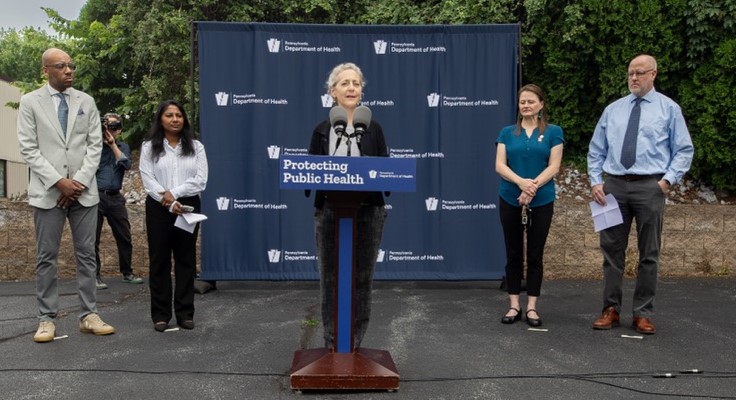
LANCASTER, PA — Pennsylvania health officials are expanding vaccination efforts and public health outreach as statewide measles cases have risen to 84 this year, with the vast majority of infections concentrated in the Lancaster-Lebanon region among people who are not fully vaccinated.
The Pennsylvania Department of Health said Friday that 72 of the cases identified since late April have occurred in Lancaster and Lebanon counties and surrounding communities, prompting an intensified response that includes pop-up vaccination clinics, provider education and expanded public health monitoring.
Statewide, cases have been reported in Berks, Chester, Dauphin, Lancaster, Lebanon, Montgomery, Northumberland and York counties.
The outbreak marks one of Pennsylvania’s most significant measles resurgences in recent years and comes as health officials warn that declining vaccination rates have left some communities vulnerable to the highly contagious virus.
“The single most effective way to avoid contracting or spreading measles is to get fully vaccinated,” Secretary of Health Dr. Debra Bogen said. “High rates of vaccination in a community reduce the spread of the highly contagious measles virus.”
The department said state health center staff have administered more than 1,300 doses of the measles, mumps and rubella (MMR) vaccine this year, including more than 430 doses through pop-up clinics in the Lancaster-Lebanon region.
Two doses of the MMR vaccine provide approximately 97% lifetime protection against measles, according to the department.
Because measles had been largely eliminated in the United States since 2000, many healthcare providers have never treated a patient with the disease. To improve preparedness, the department has issued multiple health alerts and, over the past two weeks, trained more than 1,000 physicians, nurses and other healthcare professionals on recognizing and treating measles.
Bogen said healthcare providers and community partners play a critical role in the state’s response by answering questions about the disease and encouraging vaccinations.
Measles spreads through the air when an infected person coughs, sneezes or breathes and can remain airborne or on surfaces for up to two hours after an infected person leaves an area.
Symptoms include fever, cough, runny nose and red, watery eyes, followed by a rash that begins on the head and spreads downward. Symptoms can develop seven to 21 days after exposure.
According to the department, those most at risk include unvaccinated individuals, infants too young to receive the MMR vaccine and people from regions with low vaccination rates or active measles transmission.
The department said local health officials continue conducting contact tracing and public notifications when new cases are identified to limit further spread.
Pennsylvania also plans to make school-level vaccination information publicly available in the coming weeks, expanding the state’s existing county-level immunization data.
People who believe they have been exposed to measles and are experiencing symptoms are encouraged to contact their healthcare provider or call the Department of Health’s toll-free hotline at 877-PA-HEALTH (877-724-3258).
Additional information about measles is available at www.pa.gov/measles.
Support the local news that supports Chester County. MyChesCo delivers reliable, fact-based reporting and essential community resources—free for everyone. If you value that, click here to become a patron today.