
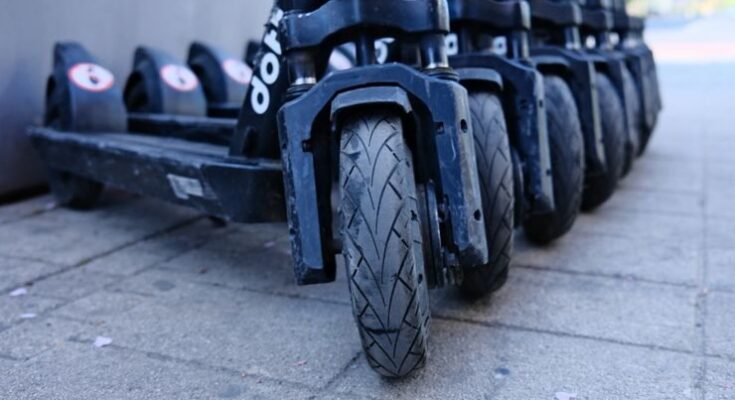
ALLENTOWN, PA — Pennsylvania senators examined statewide safety and age restrictions for privately owned electric scooters Tuesday as injuries, deaths and uneven local rules increase pressure on the General Assembly to establish a uniform regulatory framework.
The Senate Democratic Policy Committee hearing focused on how e-scooters and other micromobility devices should be regulated and incorporated into transportation infrastructure.
The panel also considered Senate Bill 1008, known as Abby’s Law, a bipartisan proposal sponsored by state Sen. Tim Kearney, D-26. The measure is named for Abby Gillon, who died at age 12 while riding an e-scooter with a friend.
Kearney argued that the Senate should advance the bill after testimony from transportation officials, police and safety advocates.
“Public safety shouldn’t sit in committee — it should be a shared priority for all of us,” Kearney said.
State Sen. Nick Miller, D-14, who chairs the committee, framed the issue as a balance between transportation access and public safety.
“E-bikes and e-scooters can help connect people to jobs, close transportation gaps and provide more affordable ways to get around, but safety has to come first,” Miller said.
Pennsylvania Department of Transportation representative Henry Beaver told the committee that the state needs a legal framework covering privately owned and commercially operated low-speed e-scooters.
“In general, low-speed e-scooters should be regulated much the same as pedalcycles, and core rules and requirements should apply equally to private and commercial use,” Beaver said.
Law-enforcement representatives called for consistent statewide rules rather than a patchwork of local requirements.
“Pennsylvania should not settle for partial regulation,” Scott Bohn, executive director of the Pennsylvania Chiefs of Police Association, said. “At a minimum, legislation should require a uniform statewide framework.”
Allentown Police Chief Charles Roca told lawmakers that micromobility devices should be treated as vehicles when used on public roads.
“When it’s on the road, it’s not a toy, it’s a form of conveyance,” Roca said.
Salisbury Township Police Chief Donald Sabo emphasized that safety concerns extend beyond Pennsylvania’s cities to boroughs and townships.
The hearing also addressed infrastructure. Becky Bradley, executive director of the Lehigh Valley Planning Commission, urged lawmakers to support protected bicycle lanes and coordinated transportation planning that would allow residents to use smaller vehicles more safely.
Advocates testified that micromobility can expand transportation access for people who cannot rely on private automobiles but requires clearer integration into the wider road network.
Scott Slingerland, executive director of the Coalition for Appropriate Transportation, called for better bicycle-crash data to guide legislation. He noted that many crashes involve solo falls and are never reported to police, leaving hospital admissions as a potentially important source of information.
The coalition has asked St. Luke’s University Health Network and Lehigh Valley Health Network-Jefferson to aggregate emergency-room data to help identify crash trends, Slingerland told the committee.
Other participants included representatives from the Pennsylvania Downtown Center, Mobilify Southwestern Pennsylvania and AAA.
The testimony placed three connected decisions before lawmakers: establishing uniform operating rules, determining age and safety requirements and deciding how road infrastructure should accommodate e-scooters and related devices.
Support the local news that supports Chester County. MyChesCo delivers reliable, fact-based reporting and essential community resources—free for everyone. If you value that, click here to become a patron today.