
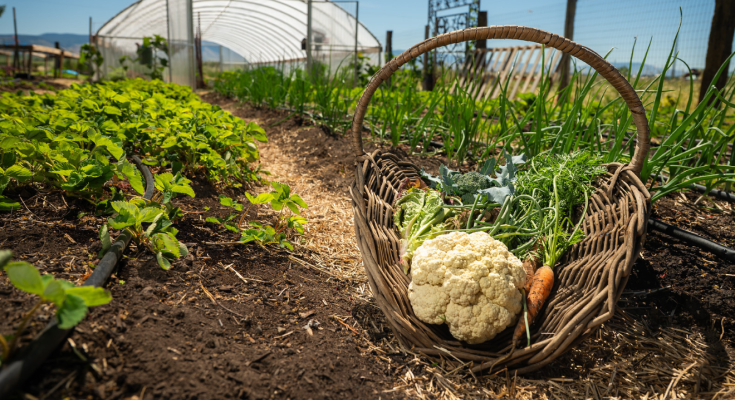
WASHINGTON, D.C. — The U.S. Department of Agriculture will increase funding for its Regenerative Pilot Program to $1 billion in fiscal 2027 from $700 million, expanding federal support for farmers and ranchers adopting whole-farm conservation practices focused on soil, water and other natural-resource concerns.
Producers can now apply for the second year of the program through USDA’s Natural Resources Conservation Service, with $650 million allocated through the Environmental Quality Incentives Program and $350 million through the Conservation Stewardship Program.
The increase follows more than $851 million in obligations across more than 5,100 contracts for whole-farm regenerative conservation practices during the previous fiscal year, according to NRCS.
USDA is also loosening one of the program’s eligibility requirements for fiscal 2027. Producers seeking assistance through the Conservation Stewardship Program will need to address at least 75% of applicable resource concerns, down from the 100% threshold used in the fiscal 2026 pilot.
The change lowers the barrier to participation while retaining the program’s emphasis on whole-farm conservation planning and measurable outcomes.
USDA is also giving states greater flexibility over which practices qualify. State Technical Advisory Committees will be able to add conservation practices based on local resource concerns, agricultural production systems and producer needs under NRCS’s locally led conservation model.
The program allows farmers and ranchers to bundle multiple conservation practices into a single application rather than pursuing separate applications for individual measures.
“Last fiscal year, NRCS obligated more than 5,100 contracts for more than $851 million to implement whole-farm conservation practices for regenerative agriculture,” NRCS Chief Colton L. Buckley said. “We are building on this success by improving flexibility without sacrificing outcomes and strengthening delivery and accountability.”
Fiscal 2027 changes will also include monitoring and evaluation options tailored to cropland, grazing and forestry operations, along with dedicated funding set-asides, additional technical support and new tracking mechanisms.
USDA describes the program as outcome-based, with participating producers developing conservation plans that address soil health, water management and other resource concerns across an entire operation.
The agency is positioning the increased funding partly as a way to help producers improve long-term farm resilience and potentially reduce reliance on costly agricultural inputs.
Farmers and ranchers can apply for both EQIP and CSP assistance through a single regenerative agriculture application at their local NRCS Service Center. Applications must be submitted by the applicable state ranking dates for fiscal 2027 funding consideration.
Additional program and application information is available at nrcs.usda.gov.
Support the local news that supports Chester County. MyChesCo delivers reliable, fact-based reporting and essential community resources—free for everyone. If you value that, click here to become a patron today.