
HARRISBURG, PA — Pennsylvania legislation that would allow permitted drone operators to locate wounded or downed game remains stalled in a Senate committee as the 2025-26 legislative session approaches its Nov. 30 conclusion, leaving hunters and wildlife recovery businesses subject to restrictions on aerial searches.
Senate Bill 303, sponsored by Republican Sen. Jarrett Coleman of Lehigh and Bucks counties, would establish a permit system administered by the Pennsylvania Game Commission for recovering lawfully harvested wildlife using small unmanned aircraft.
The proposal would distinguish recovery operations from the use of drones to locate live game during hunting, a practice restricted under Pennsylvania’s Game and Wildlife Code.
Referred to the Senate Game and Fisheries Committee in February 2025, the legislation has not advanced from the committee.
The proposed changes have attracted attention in Chester County, where hunting plays a role in managing white-tailed deer populations across agricultural properties, preserved land and suburban-rural communities.
Daniel Perry, an Army veteran and Federal Aviation Administration-certified commercial drone pilot who recently moved to Landenberg, is advocating for the legislation through a petition supporting drone-assisted deer recovery.
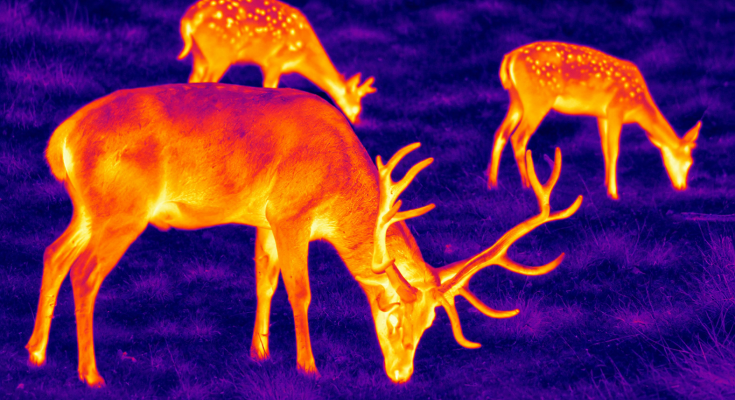
Perry operates RidgeLine Aerial Services LLC and uses thermal imaging equipment in his commercial drone operations. He argues that the technology could help hunters recover wounded animals that might otherwise remain undiscovered.
“One of the greatest potentials of this technology is in wildlife recovery,” Perry said. “Specifically, drones equipped with thermal imaging can locate downed deer rapidly, even under the cover of night or in dense foliage.”
Supporters contend that aerial recovery could reduce the loss of harvested game, limit prolonged searches and help hunters avoid crossing unfamiliar private property.
The proposed legislation would establish restrictions intended to prevent recovery permits from being used to circumvent hunting regulations.
Under SB 303, authorized operators would use drones weighing less than 55 pounds, including attached equipment, and would be required to comply with applicable FAA regulations.
The bill would permit drone-mounted spotlights during authorized recovery operations while prohibiting participants from possessing firearms, bows or other hunting implements during recovery flights.
Operators would also be required to maintain records of recovery flights and provide them to the Game Commission upon request. Additional restrictions would govern situations in which a drone locates an animal that remains alive.
Those provisions are intended to address concerns that aerial technology could be used to scout live animals, interfere with wildlife or provide hunters with an advantage inconsistent with fair-chase principles.
The issue gained statewide attention following a 2023 Game Commission investigation involving Downingtown resident Joshua Wingenroth, who operated a drone-based deer recovery business.
Game wardens conducted an undercover operation at Welch Mountain Nature Preserve in Lancaster County, resulting in charges against Wingenroth for using drone technology in connection with wildlife recovery.
Wingenroth was initially convicted, but the charges were dismissed on appeal in January 2025 on evidentiary grounds. The outcome did not establish a definitive judicial ruling on whether drone-assisted recovery is permissible under Pennsylvania law.
The enforcement action helped prompt Coleman’s legislative efforts, which began with Senate Bill 1312 during the previous legislative session.
The dispute illustrates the difficulty of applying existing hunting regulations to technology capable of locating animals through thermal imaging, particularly when the intended purpose is recovering game rather than identifying targets before a shot.
Pennsylvania already permits the use of tracking dogs to locate wounded deer, a distinction supporters of drone recovery legislation cite in arguing for a regulated alternative.
Perry stated that the existing restrictions can force hunters to spend hours searching wooded areas, sometimes after dark, with diminishing prospects of recovering an animal.
“Hunters spend countless uncomfortable hours scouring the terrain at night, often venturing onto unfamiliar properties, with a diminishing chance of recovering their target,” he noted.
He also argues that permitting thermal drone recovery could improve outdoor safety and reduce the waste of venison from animals that cannot be located through conventional tracking methods.
The debate extends beyond Pennsylvania. Supporters point to policies in other states that permit certain forms of drone-assisted wildlife recovery, while opponents of expanded aerial technology have raised concerns about enforcement, wildlife disturbance, and the potential misuse of drones during active hunts.
Perry’s petition, which had collected 28 signatures at the time of the information provided, urges lawmakers to approve SB 303 before the legislative session ends.
The petition is available at change.org/p/allow-pennsylvania-hunters-to-use-drones-for-deer-recovery.
“Implementing SB 303 would align Pennsylvania with the advanced tools at our disposal, reflecting a commitment to humane hunting practices,” Perry said.
With the legislative session nearing its conclusion, the proposal faces a limited window for committee consideration and further action in the General Assembly.
Support the local news that supports Chester County. MyChesCo delivers reliable, fact-based reporting and essential community resources—free for everyone. If you value that, click here to become a patron today.