
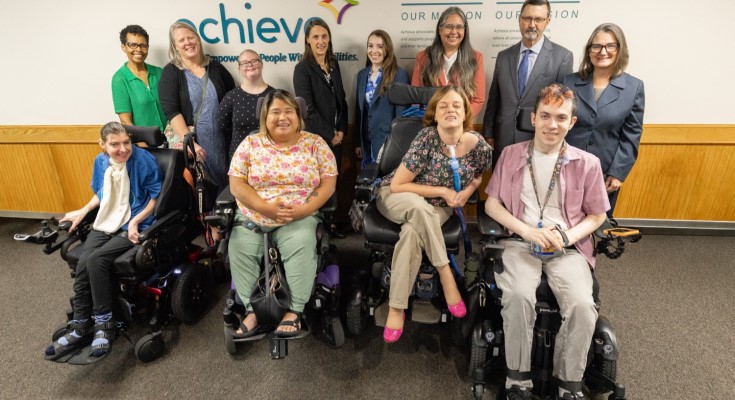
PITTSBURGH, PA — The Shapiro administration reaffirmed Pennsylvania’s commitment Wednesday to community-based disability services after the U.S. Department of Justice withdrew its reliance on longstanding federal guidance, a shift state officials contend could weaken protections for about 200,000 residents receiving care outside institutions.
The Justice Department reported July 20 that it would no longer rely on guidance tied to the U.S. Supreme Court’s 1999 decision in Olmstead v. L.C. when enforcing the Americans with Disabilities Act.
The federal action does not change the law or overturn the ruling, which established that unjustified segregation of people with disabilities constitutes discrimination under the ADA.
The decision requires states to provide services in community settings instead of institutions when appropriate, consistent with an individual’s needs and choices, and when the services can reasonably be provided.
Pennsylvania officials and disability advocates discussed the federal shift during a roundtable at Achieva in Pittsburgh. Participants included Josie Badger, executive director of the Governor’s Advisory Commission on People with Disabilities, and Department of Human Services Deputy Secretaries Kristin Ahrens and Juliet Marsala.
Badger stated that Pennsylvania had closed most of its state centers and shifted care toward helping people with disabilities live, work and participate in their chosen communities following the Olmstead ruling.
“In Pennsylvania, we are not turning back the clock,” Badger stated, describing continued protection of disability rights and community-based care as a state priority.
Mary Hartley, president of The Arc of Greater Pittsburgh and senior vice president of Achieva, reported that families are concerned about what the Justice Department’s change could mean for community services.
“The governor’s dedication to the ADA and Olmstead sends an important message that Pennsylvania remains committed to protecting the rights and independence of people with disabilities,” Hartley stated.
Approximately 200,000 older adults and people with intellectual and physical disabilities receive services in Pennsylvania homes and communities, the highest number in state history, according to the administration.
Pennsylvania has increased spending on disability services and workforce support in recent budgets. The fiscal 2025-26 budget included $21 million to raise wages for eligible direct-care workers to nearly $15 an hour on average, expand paid time off and increase access to affordable insurance for about 8,500 workers.
The fiscal 2024-25 budget included $354.8 million in state and federal funding for adult intellectual disability and autism services. The money supported higher provider and direct-support professional rates and efforts to reduce the emergency waiting list for adults seeking services.
The administration reported that the adult emergency waiting list has declined 39% since February 2024.
The 2026-27 budget maintains funding for direct-support professional wages and increases special-education funding by $55 million to $1.58 billion.
Shapiro also signed three executive orders in April expanding protections for people with disabilities and autism and creating the Governor’s Advisory Commission on People with Disabilities.
Achieva provides early-intervention, employment, housing, family trust, advocacy and lifelong-support services to more than 10,000 Pennsylvanians annually.
Support the local news that supports Chester County. MyChesCo delivers reliable, fact-based reporting and essential community resources—free for everyone. If you value that, click here to become a patron today.