
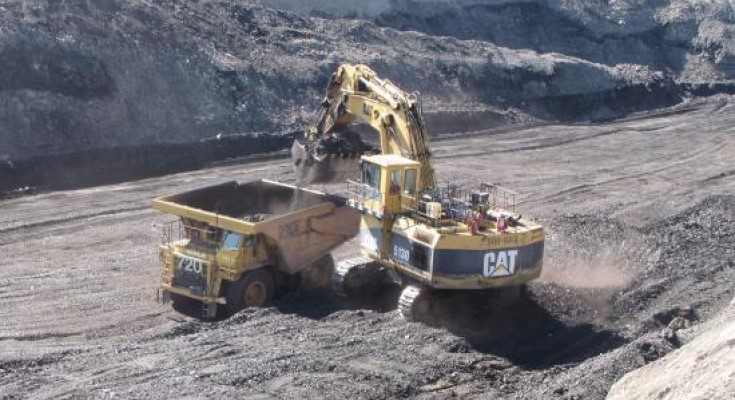
WASHINGTON, D.C. — Federally managed lands hold an estimated 356 billion short tons of available coal resources beyond reserves tied to active mines, according to a U.S. Geological Survey assessment released by the Interior Department last week.
The report also identified 4.2 billion short tons of reported reserves associated with operating mines on federal lands.
At the current national consumption rate, the combined resources could theoretically meet U.S. coal demand for at least 600 years, Interior stated. The estimate does not indicate that all identified coal can be economically or technically recovered.
The assessment covers public lands administered by the departments of Agriculture, Defense, Energy and Interior, along with the Tennessee Valley Authority.
Wyoming accounts for 14 of the 34 mines on federal land and holds 87% of the reported reserves associated with active federal-land mines. Colorado has six mines, North Dakota and Utah each have four, and Alabama and Montana each have three.
The North Antelope Rochelle Mine in Wyoming’s Powder River Basin is the largest-producing coal mine on federal land and holds the largest reported coal reserves in the U.S. and globally, according to Interior.
Of the 34 mines covered, 29 produce thermal coal for electricity generation. Three Alabama mines produce metallurgical coal for steelmaking, Colorado’s King II Mine supplies coal for cement production, and Utah’s Coal Hollow Mine is idled.
Interior Secretary Doug Burgum added metallurgical coal to the federal government’s 2025 List of Critical Minerals.
The study was prepared in response to an executive order President Donald Trump signed in 2025 directing the government to assess coal resources beneath federal lands.
The USGS also identified gaps in geologic mapping, particularly in Alaska, where it estimates at least 140 billion short tons of available coal resources. The agency stated that Alaska’s total could be as high as 5.5 trillion short tons, reflecting substantial uncertainty in less-studied areas.
Burgum stated that the assessment would help the government manage public lands while supporting energy production and economic activity.
The full report, “Coal Beneath Federal Lands in the United States—Mines, Reserves, and Resources,” is available at https://pubs.usgs.gov/publication/cir1570.
Support the local news that supports Chester County. MyChesCo delivers reliable, fact-based reporting and essential community resources—free for everyone. If you value that, click here to become a patron today.