
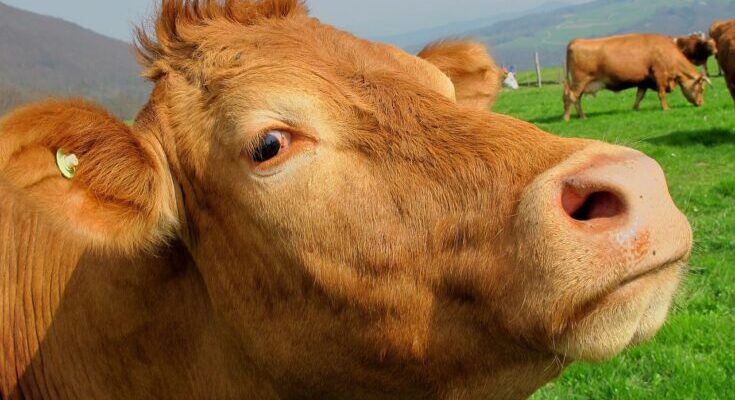
WASHINGTON, D.C. — The Internal Revenue Service extended tax relief for farmers and ranchers in drought-affected areas across 49 states and other jurisdictions, allowing eligible producers more time to replace livestock sold because of drought and defer recognition of gains from those sales.
Notice 2026-54 applies to specified counties and other jurisdictions that experienced exceptional, extreme or severe drought during the 12 months ended Aug. 31, 2026. The IRS said the qualifying areas include 49 states, the District of Columbia, Puerto Rico, and other regions.
The relief generally applies to livestock held for draft, breeding, or dairy purposes and sold or exchanged solely because of drought conditions. Poultry and livestock raised for slaughter or held for sporting purposes do not qualify under the provision.
Under Section 1033 of the Internal Revenue Code, certain livestock sales caused by drought can be treated as involuntary conversions, allowing taxpayers to postpone recognition of gain when qualifying replacement property is acquired within the applicable period. Notice 2006-82 established the framework for extending that period when drought persists.
Farmers and ranchers in federally designated drought areas normally receive four years after the close of the first tax year in which gain is realized to replace eligible livestock, rather than the standard two-year replacement period. The Treasury secretary may extend that period when qualifying weather conditions persist for more than three years.
Notice 2026-54 extends the deadline for taxpayers whose four-year replacement period otherwise would expire at the end of 2026 if their applicable region includes a jurisdiction listed in the notice. The extension continues through the end of the taxpayer’s first tax year after the region records its first drought-free year.
A drought-free year is defined as a 12-month period ending Aug. 31 in which no location within the applicable region experiences exceptional, extreme or severe drought during any week. The applicable region includes the county where the drought-related livestock sale occurred and every contiguous county.
The National Drought Mitigation Center’s U.S. Drought Monitor is used to determine whether those conditions occurred. The IRS also publishes an annual list of qualifying jurisdictions that taxpayers may use instead of reviewing the weekly drought maps.
For taxpayers whose replacement period was scheduled to expire at the end of 2026, the practical effect is that qualifying livestock do not have to be replaced until the end of the first tax year following the first drought-free year for the applicable region. The longstanding IRS guidance illustrates that even drought in a contiguous county can keep the extension in effect.
“Large swaths of the United States continue to experience drought conditions, distressing hard-working American farmers and ranchers,” IRS Chief Executive Officer Frank J. Bisignano said. “By extending relief for those who sell or exchange livestock, the IRS is providing much needed support to those who feed our nation.”
Additional information on drought-related livestock sales and other agricultural tax issues is available in IRS Publication 225, Farmer’s Tax Guide. The IRS confirms that Section 1033(e) generally permits a four-year replacement period for qualifying weather-related livestock sales in areas eligible for federal assistance, subject to further extension for persistent drought.
Support the local news that supports Chester County. MyChesCo delivers reliable, fact-based reporting and essential community resources—free for everyone. If you value that, click here to become a patron today.