
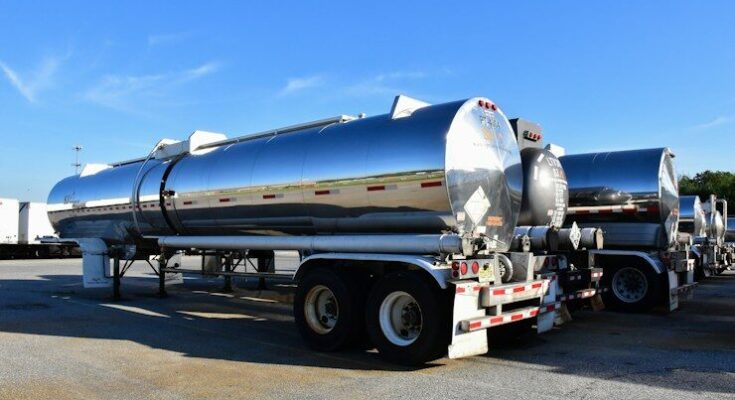
WASHINGTON, D.C. — Federal regulators are allowing eligible interstate truck drivers hauling gasoline and diesel to drive as many as 16 hours in a 24-hour period through Dec. 16, temporarily easing federal hours-of-service limits as global supply disruptions and seasonal demand put pressure on fuel distribution.
The Federal Motor Carrier Safety Administration waiver took effect Sept. 16 and applies for 90 days to motor carriers and drivers transporting gasoline and diesel fuel. The agency cited the need to maintain fuel availability for transportation providers, agricultural harvesting, and the traveling public.
The waiver provides targeted relief from the hours-of-service restrictions governing property-carrying commercial vehicles rather than a broader relaxation of trucking regulations. Drivers operating under it cannot exceed 16 hours of driving in any 24-hour period.
Drivers must take at least six consecutive hours of rest in a sleeper berth during each 24-hour period. Those without a sleeper berth must take at least eight consecutive hours off duty.
Transportation Secretary Sean Duffy framed the temporary change as an effort to limit the effects of fuel supply pressures on consumers and the broader economy.
“Our great American truckers will continue to haul the products that power America and keep our economy moving,” Duffy stated.
FMCSA attributed the action to current global supply disruptions and the possibility that gasoline and diesel demand will rise during late summer and fall. Delays in fuel distribution can also affect freight transportation and agricultural harvesting.
The relief is restricted to drivers and carriers meeting federal safety requirements. Drivers must hold a valid commercial driver’s license with the necessary endorsements and cannot be subject to an out-of-service order, disqualification or loss of driving privileges.
Motor carriers with a conditional safety rating are also excluded. Drivers must carry a physical or digital copy of the waiver while operating under its provisions.
The waiver contains additional fatigue protections. A driver requesting immediate rest must be permitted to reach a suitable safe location and receive at least 10 consecutive hours off duty before driving again.
A 10-hour break is also required when a driver transitions back to normal operations after spending at least 14 hours working under the waiver or a combination of waived and normal operations.
The exemption also covers an eligible driver returning empty to the carrier’s terminal or normal work-reporting location.
FMCSA determined that the temporary flexibility is in the public interest and, with the remaining safeguards, is likely to provide a level of safety equivalent to or greater than that under the ordinary rules.
The waiver applies to interstate commerce nationwide. During its effective period, states cannot enforce interstate-commerce requirements that conflict with the federal waiver, though states may adopt comparable relief for intrastate operations.
Support the local news that supports Chester County. MyChesCo delivers reliable, fact-based reporting and essential community resources—free for everyone. If you value that, click here to become a patron today.