
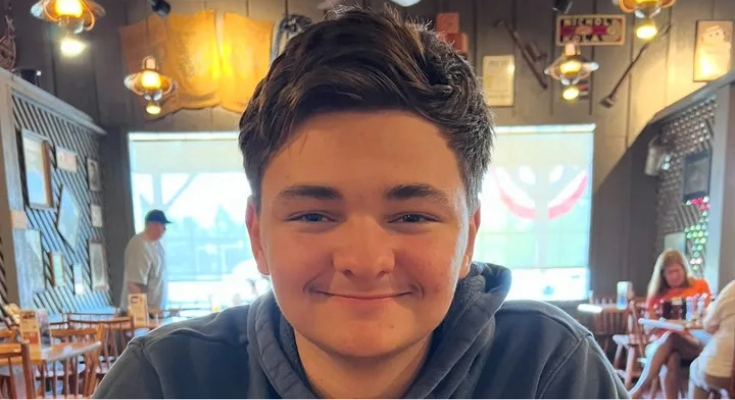
DOWNINGTOWN, PA — A Downingtown family is seeking $45,000 by January to pursue an investigational Type 1 diabetes treatment for 15-year-old Preston, a Downingtown East High School student whose eligibility for the therapy is expected to expire two years after his diagnosis.
Preston was diagnosed with Type 1 diabetes on Jan. 15, 2025, when he was 14. His family says it needs to secure his treatment before Jan. 15, 2027, and has set a Jan. 1 fundraising target to allow time to reserve a spot and make travel arrangements.
The family had raised $2,770 through GoFundMe when Preston’s mother, Melissa, provided information to MyChesCo. The campaign has a $45,000 goal.
The family is seeking Stem Cell Educator Therapy through Throne Biotechnologies in Paramus, New Jersey. Melissa said the treatment itself would cost $39,000, with the remaining fundraising goal intended to help cover travel, lodging, meals, childcare, and lost wages.
The therapy is investigational and is not approved by the U.S. Food and Drug Administration for general treatment of Type 1 diabetes, according to information provided by Throne Biotechnologies. Melissa said Throne Biotechnologies is conducting an FDA-authorized clinical trial and has received Regenerative Medicine Advanced Therapy designation for the treatment.
RMAT designation is intended to accelerate the development and review of qualifying regenerative medicine therapies. It is not FDA approval of the treatment itself.
“We know this is still being studied and that there are no guarantees about the outcome,” Melissa said. “That is why we are taking the opportunity seriously and making sure we understand the treatment, the research behind it, and what it could mean for Preston before moving forward.”
Stem Cell Educator Therapy differs from treatments that transplant stem cells into a patient. According to Throne Biotechnologies, a patient’s white blood cells are collected through apheresis and circulated outside the body through a device containing human umbilical cord blood-derived multipotent stem cells, known as CB-SC.
The company says the patient’s immune cells interact with the CB-SC inside the device before being returned to the bloodstream, while the cord blood-derived stem cells remain in the device and are not infused into the patient.
Throne Biotechnologies describes the process as an attempt to modify the abnormal immune response involved in Type 1 diabetes. The company says the approach was developed by Dr. Yong Zhao, its president and chief executive officer, after preclinical work examining how CB-SC interact with immune cells involved in autoimmunity.
The provider characterizes CB-SC as having low immunogenicity and says their ability to remain attached inside the treatment device allows a patient’s own white blood cells to be separated and returned without transferring the stem cells themselves.
Throne Biotechnologies says earlier studies have reported changes in immune-system markers, insulin production and metabolic control after treatment. In an open-label Phase 1 and Phase 2 study described by the company, 15 people with Type 1 diabetes received a single treatment.
The company reports that participants showed changes in regulatory T cells and other immune markers, along with improvements in measures including C-peptide, HbA1c and daily insulin requirements. Those findings come from early-stage studies and do not establish that an individual patient will experience the same results.
Melissa said the procedure Preston is considering would begin with preparation and laboratory testing. During treatment, his blood would circulate through an apheresis machine for roughly five hours while his cells are collected, processed through the Stem Cell Educator, and returned to him.
The family hopes the therapy could preserve or restore some insulin production, improve Preston’s blood-sugar control, and reduce his dependence on insulin. Melissa emphasized that they understand there is no guarantee Preston would experience those outcomes.
“We are hoping this treatment can give Preston a chance at a life that is less controlled by Type 1 diabetes,” she said. “We know there are no guarantees, but we want to give Preston the opportunity to see what his life could look like with fewer of the constant highs, lows, alarms, injections, and worries that come with Type 1 diabetes.”
Throne Biotechnologies describes the treatment as generally well tolerated and says reported side effects have largely been related to discomfort from the apheresis process. Because the therapy remains investigational, the company’s safety and efficacy claims remain subject to continued clinical study.
A $5,000 deposit is needed to secure Preston’s treatment spot, according to the family.
For Preston, managing Type 1 diabetes has become part of school, sports, sleep, and other routine activities. He must monitor his glucose, administer insulin, and prepare for high or low blood-sugar episodes while carrying supplies and emergency glucagon.
“He can still do the things other kids do, but there is always an extra layer of planning, monitoring, and worry that comes with it,” Melissa said. “It’s a lot for a teenager who just wants to be a normal kid.”
Preston is a 10th grader at Downingtown East, where he is taking AP U.S. History, Algebra II, Chemistry I, German III, English, and driver safety education.
Outside school, his interests include sports, history, historical reenactments, paleontology, video games, and Frank Sinatra. He had hoped to join the military before his diabetes diagnosis and has since considered careers including electrical work, ironworking, history and paleontology.
The family learned about Stem Cell Educator Therapy through the mother of one of Preston’s friends who also has Type 1 diabetes and underwent the treatment in August. Melissa said the other family reported a reduction in insulin use afterward, prompting Preston’s family to research whether he might also qualify.
That experience is anecdotal and does not establish how Preston would respond to the treatment.
The treatment opportunity has become a race against the family’s understanding of its eligibility window. Melissa said Preston must enroll within two years of his diagnosis, making Jan. 15 the deadline.
“I don’t want to look back someday and wonder if we could have given him this opportunity and didn’t because we couldn’t afford it,” she said.
People interested in supporting the family’s fundraiser can find Preston’s GoFundMe at https://gofund.me/0c27b55fe.
More information about Stem Cell Educator Therapy is available at https://www.thronebio.com/stem-cell-educator-therapy/.
Support the local news that supports Chester County. MyChesCo delivers reliable, fact-based reporting and essential community resources—free for everyone. If you value that, click here to become a patron today.