
HARRISBURG, PA — Pennsylvania farmers face mounting financial pressure from higher production costs, labor shortages and severe weather even as a planned $1.2 billion dairy processing investment promises to increase demand for the state’s milk, industry representatives told state lawmakers Tuesday.
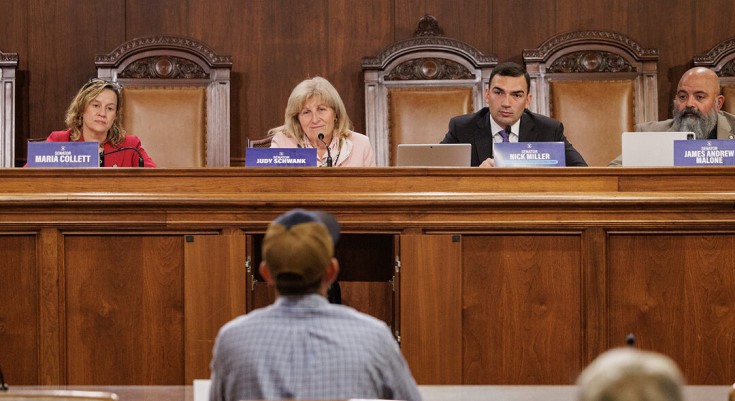
The Senate Democratic Policy Committee examined agricultural financing, farmland preservation and workforce policies during a hearing led by Sen. Nick Miller and co-hosted by Sens. Judy Schwank and James Andrew Malone.
Pennsylvania Agriculture Secretary Russell Redding warned that higher fuel and fertilizer costs, shifting federal policies, geopolitical developments and volatile markets have combined to weaken farm finances.
“Every farmer is doing math right now, and this year the numbers are harder than they should be,” Redding testified.
Agriculture supports more than 48,800 Pennsylvania farms, contributes approximately $132.5 billion to the state’s economy and sustains nearly 600,000 jobs, according to Matt Espenshade, president of the Pennsylvania State Grange.
Espenshade, a seventh-generation dairy farmer from Lancaster County, cautioned that those economic figures obscure the financial vulnerability of individual farms.
The industry’s challenges come as Chobani prepares to invest $1.2 billion in a Pennsylvania dairy processing facility expected to create more than 900 jobs and begin production in 2027.
At full capacity, the facility is expected to purchase more than 3 billion pounds of Pennsylvania milk annually, equivalent to approximately 30% of the state’s current production, Espenshade testified.
The projected demand could create substantial opportunities for dairy producers, but meeting it would require investments in livestock, feed, land, buildings, manure storage and additional workers.
“Milk production cannot be expanded with the flip of a switch,” Espenshade said.
He urged policymakers to ensure farmers have dependable purchasing commitments and adequate financing before undertaking major expansions that could expose their businesses to additional financial risk.
Farm operator Duane Swanger of Conoy Township in Lancaster County identified rising fuel, fertilizer and seed costs as major pressures on his family’s operation, according to Malone.
Swanger also credited low-interest agricultural loans and state assistance addressing avian influenza with helping farmers manage financial and operational challenges.
Lawmakers heard separate concerns about access to farmland, particularly for younger producers attempting to establish independent operations.
Noah Erwin, associate director for policy at Pasa Sustainable Agriculture, cited the U.S. Department of Agriculture’s 2022 Census of Agriculture, which found Pennsylvania led the nation in the percentage of farmers younger than 35.
Despite that advantage, Erwin argued that escalating land costs threaten the ability of younger farmers to remain in agriculture.
“Buying, or even leasing, land has become all but impossible in some places,” Erwin testified.
He recommended changes to Pennsylvania’s farmland preservation program to improve long-term access to agricultural property, noting that many farming households depend on outside employment to afford land.
Erwin also urged lawmakers to expand driver’s license eligibility regardless of immigration status, arguing that the policy would benefit agricultural employers facing labor shortages.
He cited estimates that approximately half of hired agricultural workers lack immigration status or work permits and pointed to House Bill 1518, which would address licensing eligibility but has not received a vote.
The proposal would place Pennsylvania alongside 16 other states that allow residents to apply for driver’s licenses regardless of immigration status, according to Erwin.
Miller said the testimony underscored the need for policies addressing farm profitability, workforce availability and opportunities for the next generation of agricultural producers.
“We must act now to ensure agriculture remains a cornerstone of our Commonwealth,” Miller said.
The hearing also included testimony from representatives of Penn Ag Industries and the Pennsylvania Department of Agriculture as lawmakers considered potential changes to existing agricultural assistance programs.
Support the local news that supports Chester County. MyChesCo delivers reliable, fact-based reporting and essential community resources—free for everyone. If you value that, click here to become a patron today.