
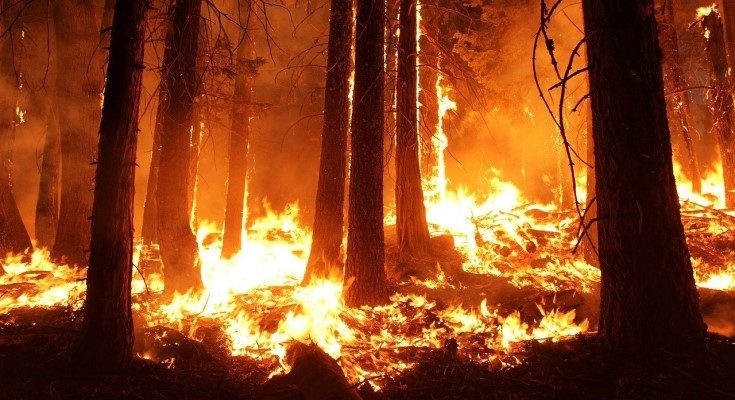
MALVERN, PA — More than 35,000 wildfires burned over 3 million acres across the United States during the first half of 2026, exceeding 10-year averages as heat, drought and development increased exposure beyond the Western states, according to an Insurance Information Institute analysis.
The Malvern-based organization, known as Triple-I, found elevated wildfire exposure across multiple regions, including the Southeast and Great Plains. Florida, Georgia and Nebraska experienced record-setting wildfire activity during the period, while Western states continued to face risks associated with heat, drought and insufficient snowpack from the 2025-26 winter.
The findings point to a widening geographic risk for homeowners, communities and insurers as development continues in areas where buildings meet undeveloped vegetation.
“Wildfire is increasingly a national risk issue rather than a regional one,” Triple-I CEO Sean Kevelighan said. “As populations continue to grow in wildfire-prone areas and weather conditions become more extreme, resilience and mitigation efforts are more important than ever for protecting lives, property and communities.”
About one-third of homes in the continental U.S. are located in the wildland-urban interface, or WUI, according to the report. That represents more than 46 million homes exposed to wildfire risk, with California maintaining the largest concentration of homes facing extreme exposure.
Heat is also contributing to conditions conducive to fire. Research cited by Triple-I found that 42% of Western U.S. land affected by wildland fires from 2001 through 2024 burned during or immediately after a heat wave.
Heat waves can dry vegetation and the atmosphere, increasing conditions favorable to wildfire ignition and spread. The number of heat-wave days across Western forests has nearly doubled since 2001, according to the report.
The most destructive events account for only a small share of wildfires but can produce disproportionate losses.
“Catastrophic wildfire is only 1% of all fires,” Craig Clements, a professor of meteorology and director of the Wildfire Interdisciplinary Research Center at San José State University, said. “It’s that one day that’s super windy or dry, that a fire starts in the right place at the wrong time and has the opportunity to spread out of control.”
For insurers, the expanding exposure increases the importance of accurately modeling wildfire risk and encouraging property-level and community mitigation. Triple-I pointed to advances in modeling, wildfire science and insurance practices as tools for managing the changing exposure.
“Insurers play an important role by supporting mitigation, improving risk understanding and encouraging investments that make homes and neighborhoods more resilient,” Kevelighan said.
Triple-I concluded that reducing losses will also require coordinated mitigation by homeowners, communities, policymakers and insurers as more property becomes exposed to wildfire risk.
Support the local news that supports Chester County. MyChesCo delivers reliable, fact-based reporting and essential community resources—free for everyone. If you value that, click here to become a patron today.